.svg)
Book Now
Quick Summary
Before diving into the full story, here's a clear snapshot of the key ideas worth carrying with you.
- True immersion means stepping inside a world, not looking at it through a screen or a headset. The word is wildly overused, and it matters that we reclaim it.
- Tactile reality fools the brain in ways digital surfaces never can. Cold marble convinces. Painted wood does not.
- We call it the Tech Fallacy: the assumption that more advanced technology automatically creates a better illusion. It doesn't. It often shatters one.
- Human imagination is still the most powerful tool in experience design, as proven by a screen-free live-action production of A Midsummer Night's Dream.
- Taking your phone away isn't a quirky house rule. It's the foundation of the whole experience.
There is a sudden, physical lightness that happens the moment you hand over your phone at our front desk, and for an hour or two the outside world genuinely ceases to exist. Most people do not realise how rare that feeling has become until they are inside it, and the quiet that opens up in its place is something we have very deliberately designed for.
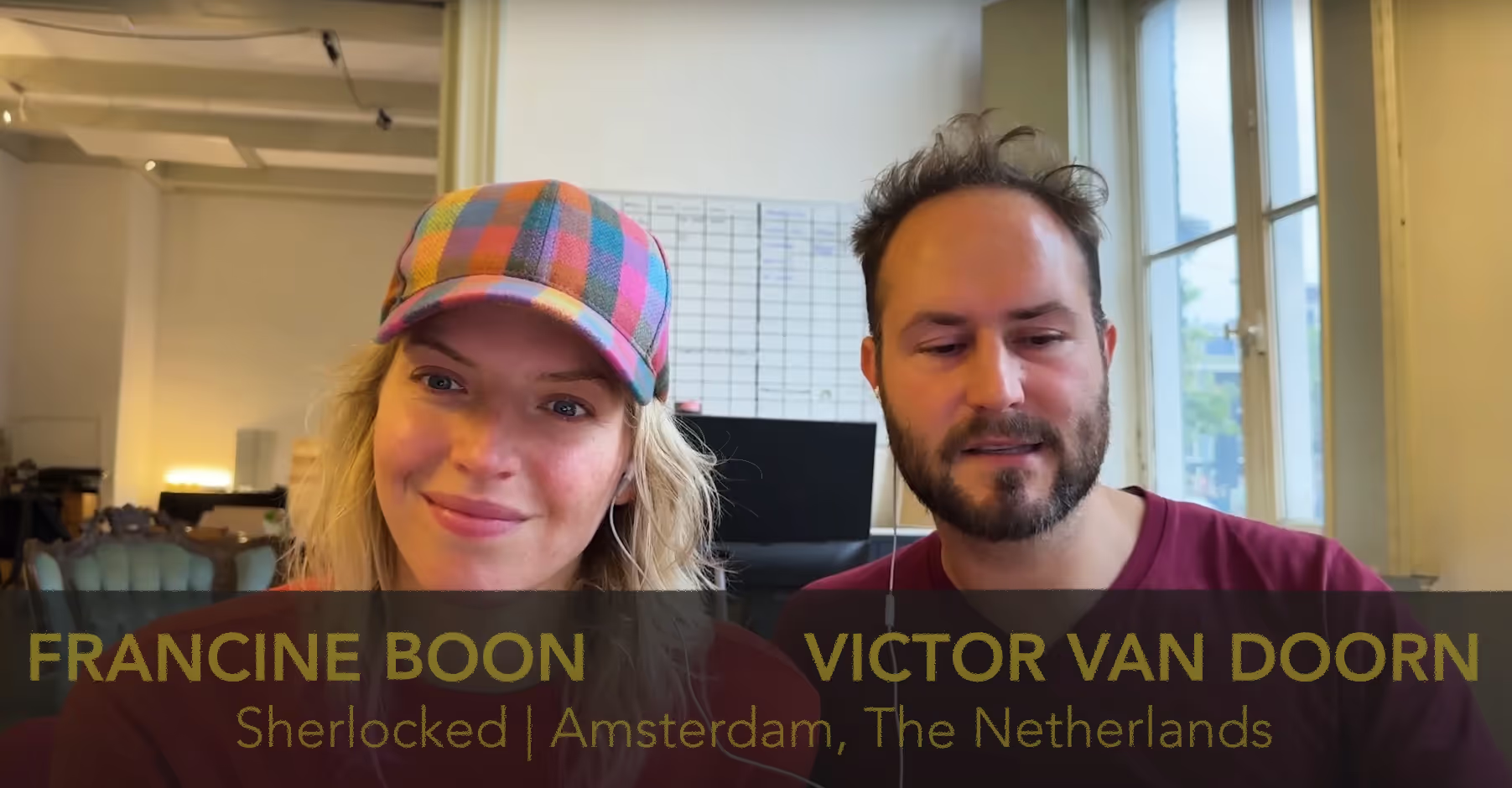
Victor van Doorn, our co-founder and creative director, and Francine Boon, our co-director and lead experience designer, sat down to reflect on what actually makes a space believable. Their answer might surprise you, because it has very little to do with technology and quite a lot to do with cold stone, analog puzzles, and the simple act of unplugging.
Reclaiming the Word "Immersive"
It is a bit sad to watch a beautiful concept become a hollow buzzword, and "immersive" is well on its way. Everywhere you look, something is calling itself immersive, from commercials to pop-up exhibitions with a projection on a blank wall, all leaning on the same overused word. Throwing light onto a surface does not transport anyone, and handing someone a headset does not make them believe.
"An immersive commercial, for example, doesn't exist," Francine notes. "It's just a word stuck on something that wants to be something it's not."
True immersion, as she describes it, is something far more specific: "To me, it means that you can surrender to an experience to an extent that you can trick your brain into believing that what you're doing is real." Victor puts it even more simply: immersion means "instead of looking at something, you step into it."
We know we have succeeded when the lines of reality begin to blur. We were genuinely moved recently when a spiritual guide visited us and asked to use the space of The Alchemist for her own authentic rituals, because when an environment feels grounded enough to hold real, personal significance for someone, the space has developed a soul.
The Tech Fallacy
We tend to assume that more sophisticated technology will always produce a better illusion, but in our experience it is often the fastest way to break one. Imagine stepping into a carefully crafted bunker from 1945, only to be handed a sleek modern tablet to solve a code. The illusion shatters instantly, not because the tablet is bad design, but because it violates the internal rules of the world you were just beginning to believe in.
We call this the Tech Fallacy, the idea that a more advanced tool automatically creates a more convincing experience. It does not. Good technology disappears into a story completely, and the easiest way to make technology disappear is very often to not use it at all.
Some of our favourite experiences rely purely on physical intuition. We once played a brilliant room in the UK where you physically maneuvered miniature wooden barrels through a wall, with no screen and no software, just the satisfying resistance of analog physics and the pleasure of a problem your hands could solve.
"The best thing that we have as humans is imagination," Francine says, "and tech will never be able to match it."
A friend of ours once organised a screen-free live-action roleplaying game of A Midsummer Night's Dream in a forest, with nothing but costume and imagination, and the magic was total. Human playfulness, it turns out, will always outrun a microchip.
Why We Take Your Phone Away
Twenty percent of achieving immersion, Victor estimates, comes down to simply taking people's phones away. It sounds almost too simple to be true, but think about what a phone actually is, which is a permanent portal to everything outside the room, where a single notification is all it takes to collapse the world you have just stepped into.
"The moment you hand your phone over, something shifts," Victor explains. "You stop being a person with a calendar and a to-do list. You're just... here."
We have watched this happen hundreds of times. Groups walk in distracted, mid-conversation, still half-inside their working day, and within minutes of surrendering their phones something physical happens, as shoulders drop, eyes focus, and people start actually looking at the room around them.
This is not a policy born from paranoia about photographs, but rather a deliberate design decision, as carefully considered as the weight of a brass key or the texture of a stone wall. An escape room is, at its heart, a world that asks you to be fully present, and the phone is the single biggest obstacle to that, which is why we remove it. What opens up in its place, that rare and unguarded quality of attention, is where the real magic lives.
The Psychology of the Wiggle
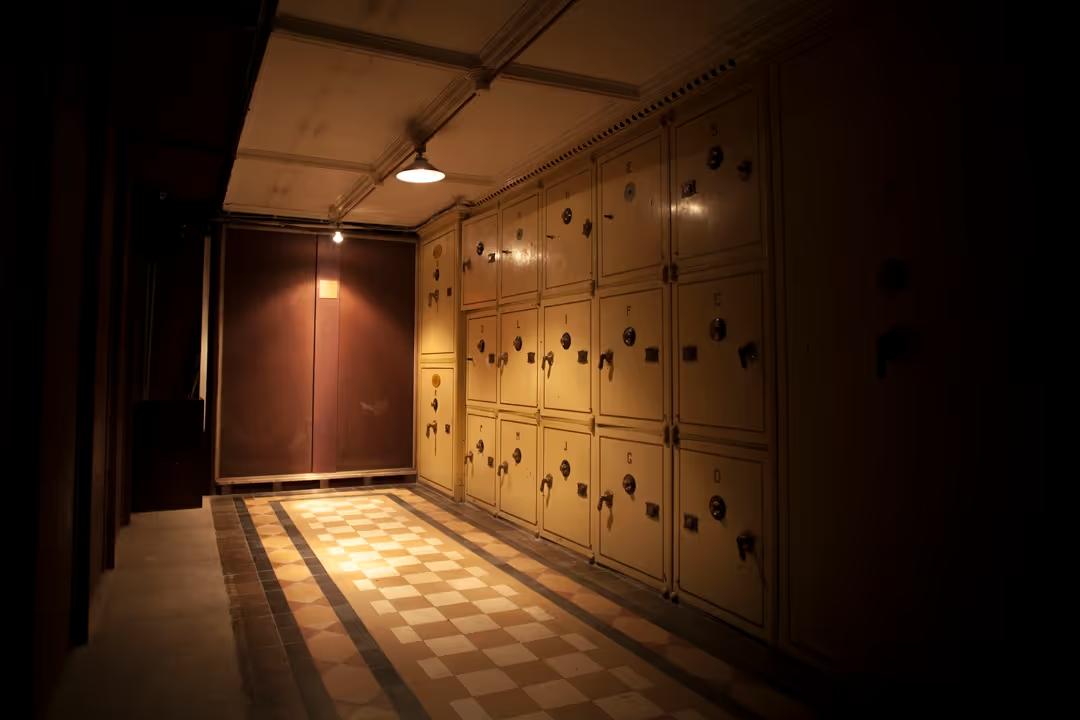
The human body is remarkably good at sensing when it is being lied to, which is why we flatly refuse to use painted facsimiles in our spaces. The Beurs van Berlage, our home, is a gorgeous building from 1903 sitting on the cusp of Art Deco, and we take our aesthetic cues directly from its historic bones, which means heavy wood, polished brass, and real stone.
"If it's a wooden fake fireplace, then you feel it, you notice it," Victor explains. "But when it's an actual marble one, you feel: oh, this is cold to the touch, so it's convincing."
We also obsess over something subtler that we call the psychology of the wiggle. If a drawer in one of our rooms is meant to be inaccessible, we do not simply glue it shut, but build it with a slight, deliberate rattle, so your brain registers it as firmly locked rather than just sealed. "Your brain says: ah, this is locked, I can't access this," Victor says, and that tiny physical signal does more for believability than any screen ever could.
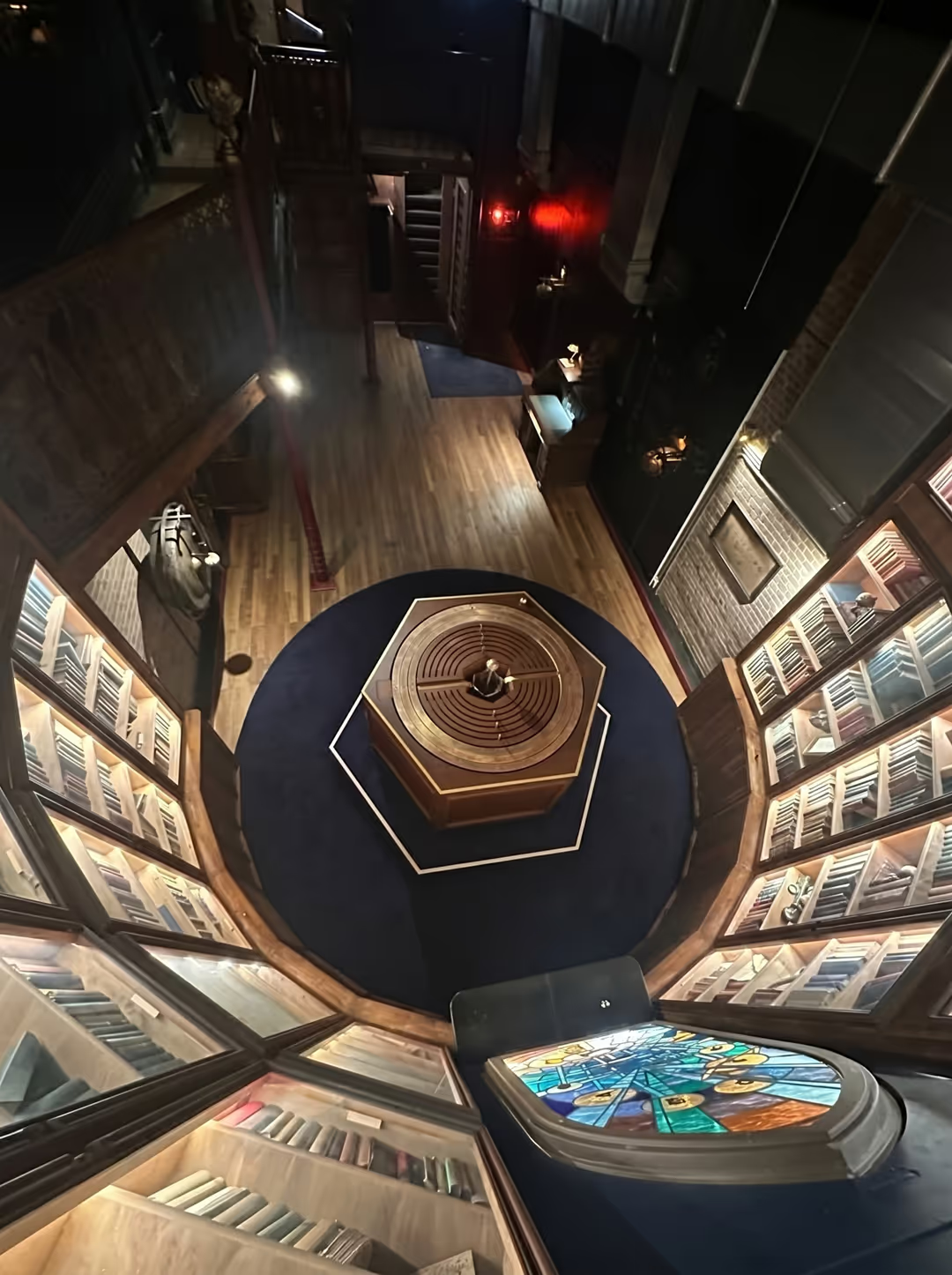
Sometimes this obsession with texture leads to the most delightful surprises. The day we installed a thick, royal blue carpet in one of our rooms, players literally laid down on the floor mid-game, just to soak in the feeling before continuing their adventure.
Wonder in an AI Future
People ask us often how artificial intelligence will change the way we build our games, and our answer is pretty simple.
"I really hope that AI at some point can do our taxes," Francine jokes. But when it comes to creative design? "I once, just for fun, checked if it comes up with interesting ideas, and it absolutely doesn't," she laughs.
Thinking up original, strange, evocative ideas is simply the best part of this work, and we have zero interest in handing that joy over to a machine. We also believe, genuinely, that our games need to stay human-led for a deeper reason, because as the world becomes increasingly automated, deeply social and offline experiences will become a rare and coveted comfort. People are already beginning to feel it, and the hunger for something real, something you can touch, something that asks nothing of your attention span, is only growing.
The Quiet Magic of Being Fully Here
Magic is not found in a line of code or a blinding screen, but in the weight of a brass key, the cold touch of a stone wall, and the shared laughter of people who have entirely forgotten the outside world for an hour. That kind of presence has become genuinely rare, which is exactly why we keep designing for it so stubbornly.
Come leave your phone at the door. Let's make some magic. ✨
Table of Contents