.svg)
Book Now
Quick Summary
Before diving into the full story, here’s a clear snapshot of the key ideas behind our approach to immersive narrative design.
- Attention is a limited currency, and visitors often spend it all on the "famous" centerpiece while missing the fascinating mystery hanging right above their heads.
- Every building has a ghost, meaning there is always a forgotten history, a strange architectural quirk, or a secret detail waiting to be unpacked into a world.
- Immersion requires depth, so we dig for the "secret societies" and the gritty truths that make a brand story feel alive rather than manufactured.
- Architecture is a character, and we believe in using the physical constraints of your space to drive the plot forward.
There is a phenomenon you notice when you spend enough time watching crowds. In any gallery or brand space, people tend to gravitate toward the loudest object in the room. They flock to the famous painting. They stare at the hero product. They read the big sign.
But if you look just a few inches higher, you often find something much more interesting.
In her conversation on The Art Engager podcast, our co-director Francine Boon shared a detail about the Rijksmuseum that has stuck with us. Nobody looks at the painting above the famous one. That sentence has stayed with us because it captures a paradox. We build places to preserve meaning, then design them in ways that hide it.
Immersive narrative design begins at that blind spot. It asks what happens if we redirect attention, not with louder signage, but with story.
Listening to the Painting Nobody Sees
There is a funny thing that happens when you follow curiosity instead of hierarchy. The overlooked object starts whispering.
When we encountered the Torrentius painting, it was not the headline act. It sat slightly outside the main spotlight, carrying a strange tension. The artist had ties to a secret society. The imagery felt coded, deliberate, charged with something unsaid. That was enough. We did not need a full biography. We needed a crack in the surface.
“You look for the one detail that doesn’t sit comfortably,” Francine explained. “That’s usually where the story is hiding.”
From that single irregularity, a world unfolded. We built a narrative around secrecy, ritual and forbidden knowledge. Visitors were no longer passively observing a canvas. They were stepping into the atmosphere around it, tracing implications, testing intuition, feeling the grit of a story that refused to stay flat.
The painting did not change. The frame did not change. Only the narrative lens shifted, and suddenly the object had gravity.
That is the alchemy of immersive storytelling. You do not add meaning. You reveal the meaning that was already there.
Turning Buildings into Vaults of Memory
There is a temptation, especially in corporate spaces, to think narrative must be imported from outside. A new exhibition. A branded installation. A layer placed on top of architecture like wallpaper.
In practice, the strongest brand storytelling experiences begin with archaeology. We treat buildings like vaults. Every corridor, every renovation scar, every founder’s anecdote is sediment. When you excavate carefully, patterns emerge.
A headquarters might sit on the site of an old factory. A staircase might follow the footprint of a vanished structure. A company ritual might echo a decision made decades ago under pressure. These fragments are not trivia. They are narrative anchors.
We once worked with a space where employees walked past a sealed door every day without knowing its origin. It turned out to be a remnant of an earlier layout, preserved for structural reasons. Instead of hiding it, we wrote it into the experience. The door became a portal in the story, a tactile reminder that organisations evolve, layer by layer, like cities.
Visitors remember that door. Not because it was spectacular, but because it connected them to time.
From Spectators to Participants
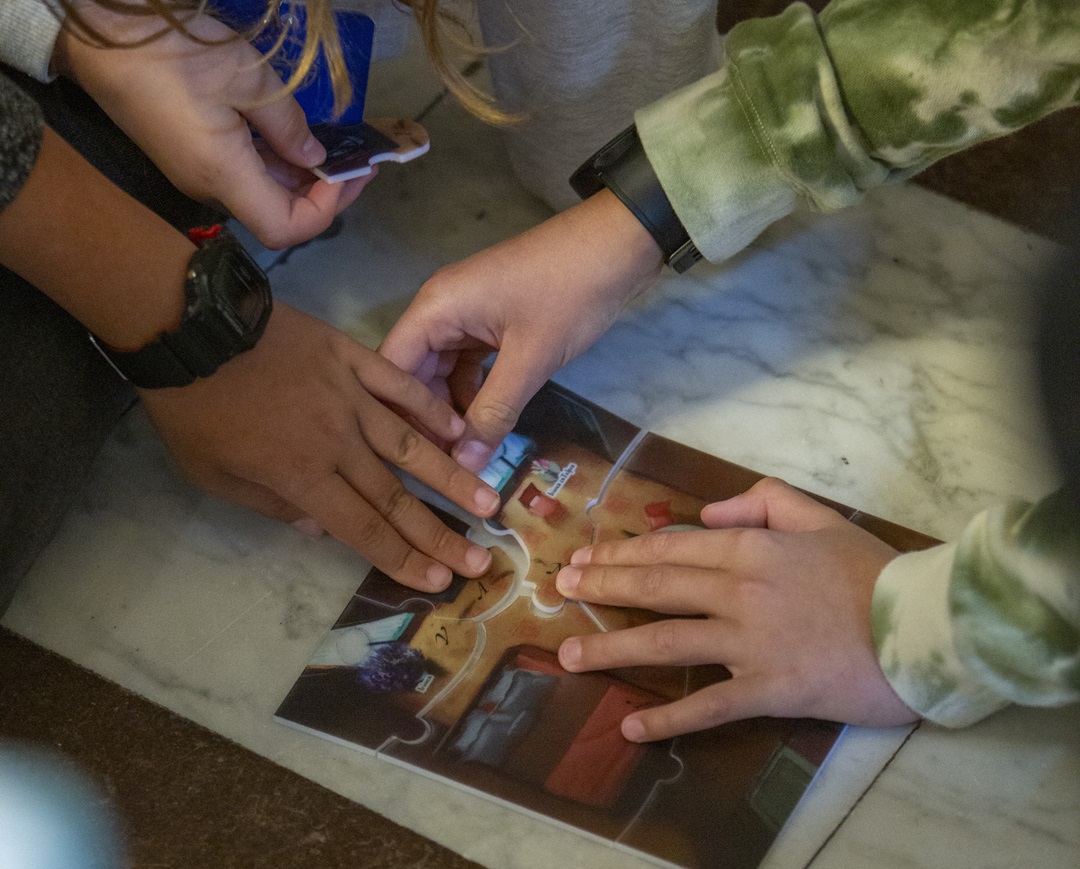
There is a difference between showing history and inviting someone inside it. Traditional displays say, here is what happened. Immersive narrative design asks, what is your role in what happened?
That shift is subtle and messy and incredibly powerful. It demands clarity about the emotional journey as much as the informational one. We map curiosity the way architects map load-bearing walls. Where will attention rest. Where will tension build. Where will release happen.
Francine often talks about museums as vaults of stories, not vaults of objects. The same applies to brands. Products, awards, milestones, they are artefacts. Without narrative, they sit politely. With narrative, they breathe.
When a visitor feels implicated in the story, memory forms differently. The experience becomes personal. They are not recalling facts. They are recalling a moment in which they acted, chose, discovered.
That is the difference between walking through a showroom and carrying a place with you afterward.
Finding the Ghost in the Machine
Every building has a ghost. Sometimes it is a founder’s obsession. Sometimes it is a crisis that shaped the culture. Sometimes it is a detail everyone stopped noticing because it became too familiar.
Our job is not to invent mythology from nothing. It is to notice where serendipity already lives and give it structure. We follow threads that feel slightly charged, slightly unresolved. We test them against intuition. If the story tightens instead of collapsing, we know we are close.
The process is rarely neat. It involves interviews, contradictions, discarded ideas and the occasional wrong turn that teaches us more than the right one would have. But inside that mess, clarity appears. A throughline. A reason this space exists in the form it does.
Once that reason is articulated, design becomes precise. Every puzzle, sound cue and visual choice reinforces the same emotional core. Visitors may not articulate it consciously, but they feel coherence. They feel intention.
And intention is what turns a location into a memory.
The Space Already Knows the Story
The lesson we return to, again and again, is humbling. The best narratives are not imposed. They are uncovered.
When Francine says nobody looks at the painting above the famous one, she is not criticizing audiences. She is pointing to opportunity. Attention is a resource, and immersive design can guide it toward meaning that was hiding in plain sight.
For brands and institutions, this is liberating. You do not need to fabricate spectacle. You already have a history, a texture, a set of origins that can be shaped into experience. With the right narrative lens, a building stops being a container and becomes a character.
You have the space. We have the story. Together we create the memory.
Table of Contents