.svg)
Book Now
Quick Summary
Before diving into the full story, here’s a clear snapshot of the key ideas involved in bringing educational escape rooms to history museums and historic sites.
- The age of twelve is a turning point, where society abruptly tells us that play is no longer for learning, which creates a massive engagement gap for teenagers.
- Abstract history needs tactile solutions, like teaching the metric system by making kids measure furniture with their own thumbs rather than reading a placard.
- You must kill your darlings, meaning we sometimes have to leave out fascinating facts to ensure the main narrative actually sticks.
- Teens crave agency, so giving them a job to do is far more effective than giving them a lecture to listen to.
There is a specific demographic that keeps museum and heritage educators up at night. They are too old for the treasure hunt with the cartoon mascot. They are too young to appreciate the quiet contemplation of a three-hour audio tour. They are between twelve and eighteen years old.
If you have ever tried to drag a teenager to a heritage site, you know the look. It is a mix of boredom and deep suspicion that they are about to be lectured.
In her conversation on The Art Engager podcast, our co-director Francine Boon pinpointed exactly why this happens. She calls it the "Cliff of Play." We spend the first decade of a child's life agreeing that play is the best way to learn empathy, physics, and negotiation. Then, as Francine notes, "suddenly we say, now you have to sit down and listen to someone speaking in front of you."
We stop playing. And when we stop playing, we stop caring.
At Sherlocked, we have been obsessed with reversing this trend. We wanted to see if we could take the "boring" parts of history and turn them into something teenagers would actually want to solve.
When History Gets Messy
The challenge with designing for this age group is that they have a very low tolerance for fake enthusiasm. If you tell them a wall is "talking" to them, they will roll their eyes. They want something real.
While developing Palace Mysteries, we ran into a familiar problem. The story touched on the introduction of the metric system under Napoleon. On paper, it is important history. In practice, it risks sounding like a textbook paragraph drifting through a game.
The breakthrough came when we stopped explaining and started measuring.
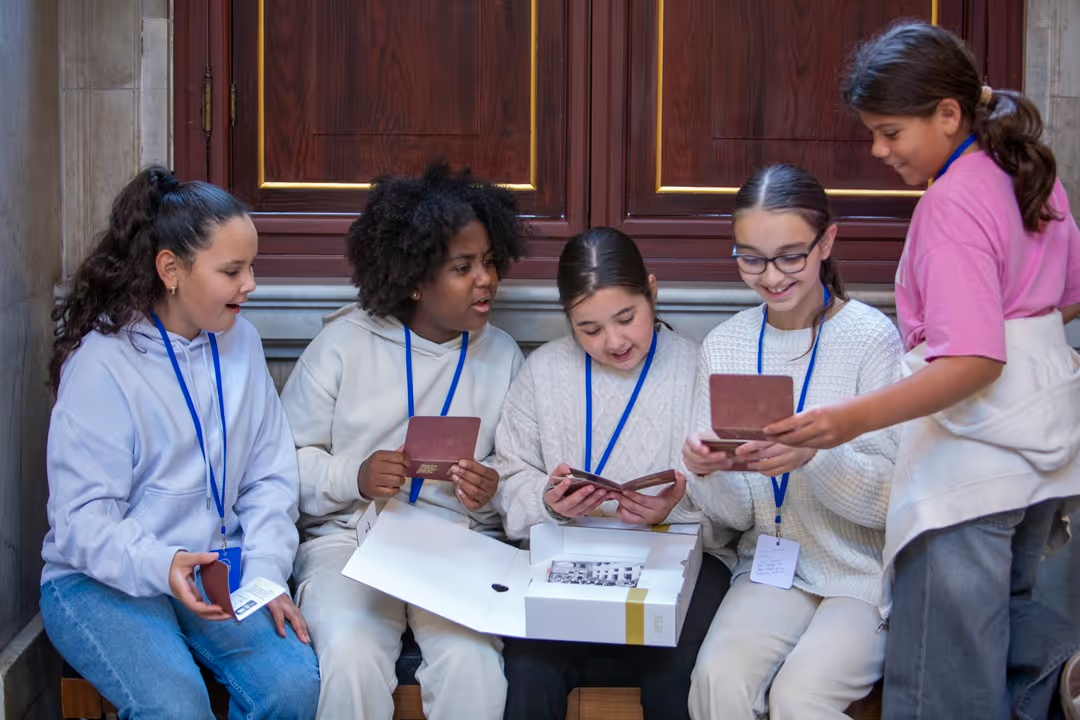
We built a puzzle around thumbs and centimeters. Participants physically compared their own bodies to standardized units. They laughed at the inconsistency. They argued about precision. They felt, in their hands, why a universal system mattered.
The history was no longer a fact to memorise. It was a sensation.
“You want people to experience the problem,” Francine explained. “Not just hear about it.”
Teenagers, especially, respond to this shift. They are exquisitely sensitive to boredom, but deeply loyal to experiences that respect their intelligence. A puzzle that uses the body invites them back into play without infantilizing them. It says, your mind is sharp, and your hands are welcome here too.
The Art of Killing Your Darlings
The hardest part of this process is not the game design. It is the editing.
Museum curators are passionate people. They know everything about their collections. They know who made the chair, what wood was used, who sat in it, and how much it cost in 1808. Naturally, they want to share it all. But as Francine put it,
"You have a limited amount of processing power."
If a student is trying to solve a puzzle, navigate a room, and collaborate with their friends, they cannot also absorb five paragraphs of text about a carpenter. We have to make hard choices. We have to "kill our darlings."
This means we might skip the provenance of the chair to focus entirely on the thumb measurement. It feels risky to leave information out. But the result is that the students actually remember the one thing we wanted them to learn. They walk away with a clear, emotional memory of the history, rather than a vague memory of being overwhelmed.
Turning "Do Not Touch" into "Please Solve This"
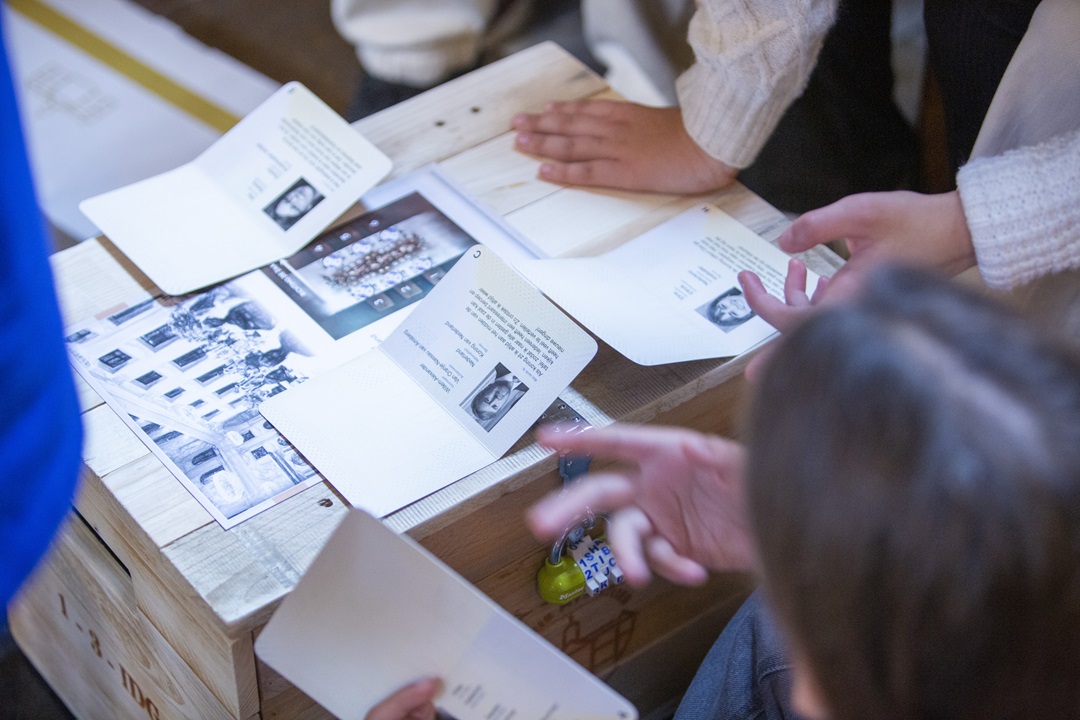
Museums and historic institutions have long trained young visitors to hover at a distance. Immersive design rewrites that script.
We do not hand them fragile artefacts. We hand them decisions. We give them systems to decode, spaces to navigate, mysteries that require cooperation. The institution stops being a shrine and becomes a field of play for the mind.
That shift is not cosmetic. It reframes the relationship between young people and culture. History stops being a finished monument. It becomes an active conversation they are allowed to enter.
We have watched teens walk out of these experiences louder, brighter, arguing about clues and laughing about mistakes. In that noise there is learning. Messy, social, embodied learning that refuses to sit quietly in a corner.
And that is exactly the point.
The Bridge is Built from Play
The lesson we keep relearning is simple and stubborn. Teenagers are not disengaged from culture. They are disengaged from formats that deny their instinct to play.
When immersive storytelling works, it does not disguise education. It restores the natural engine that powered it in childhood. Curiosity becomes kinetic again. History becomes something you move through, not something that moves past you.
We make history tangible. We turn “please, do not touch” into “please, solve this”.
If the goal is to keep young audiences inside the story instead of losing them at the cliff, the answer is not louder explanations. It is better invitations. Let’s build those invitations together. Let’s give them something worth leaning into.
Table of Contents