.svg)
Book Now

Before we tilt reality together, here’s the idea at the heart of this piece:
Quick Summary:
- Sherlocked designs for a powerful emotional beat: the moment players briefly wonder, “Wait… is this real?”
- Plausibility isn’t decoration, it’s the scaffolding that makes every emotion, surprise, and moment of belief feel grounded and memorable.
- The team deliberately anchors stories in real history, architecture, objects, and rituals, so players continue thinking about the experience long after they leave.
- This philosophy began early, including Sherlocked’s debut on De Wereld Draait Door, where escape rooms were first introduced to the Dutch public in a real, everyday setting.
- In The Vault, plausibility becomes a character itself: emails come from in-universe contacts, meetings happen in a real parking garage, and players receive an authentic mission suitcase.
- Sherlocked experiences feel real because they’re built in authentic spaces, like the historical Beurs van Berlage and its genuine vault complex, not fabricated sets.
- Even magical worlds like The Alchemist rest on true references, real techniques, and subtle grounding details woven through the room.
- This blend of truth and fiction supports Sherlocked’s mission: to make the world feel more magical by tilting reality just enough for players to rediscover mystery.
- When players go home and keep Googling, wondering, or reinterpreting what was real, that lingering magic is the goal.
There’s a moment, a tremor, that happens in every Sherlocked experience. For a heartbeat, something inside you leans forward and whispers: Wait… is this actually real? That tiny pivot is what we design for. It is fragile, fleeting, and powerful enough to change how you remember the world outside our doors.
People sometimes ask us how much the plausibility of a story matters at Sherlocked. Francine once answered with charming bluntness: “A lot.” To us, plausibility isn’t decoration. It’s the scaffolding that holds up every emotion, every surprise, and every flicker of belief that dances across a player’s face.
“We like to suspend your disbelief as much as we can,” Francine says. “We like you to consider things real while you’re playing at least.”
That “at least” is the doorway into everything else.
A Story Meant to Follow You Home
Our goal has never been to create an hour-long bubble that pops the moment you step back onto the street. We want the story to stretch into the tram ride home, into your kitchen, into the moment you curl up on the couch and think, “I need to look something up.”
“If we create a basis in reality, we create a basis in the truth,” Francine explains. “That means that when you go home and you start googling, you might find nuggets and think, ‘Wait, but if this is true, maybe the rest is also true.”
Those “nuggets” are deliberate. They are tiny threads anchored in real history, real architecture, real rituals, real objects. You tug on one, and the memory of the game shifts shape. You begin to realise the line between what happened inside the room and outside the room was thinner than you thought.
Where Fiction Meets the Evening News
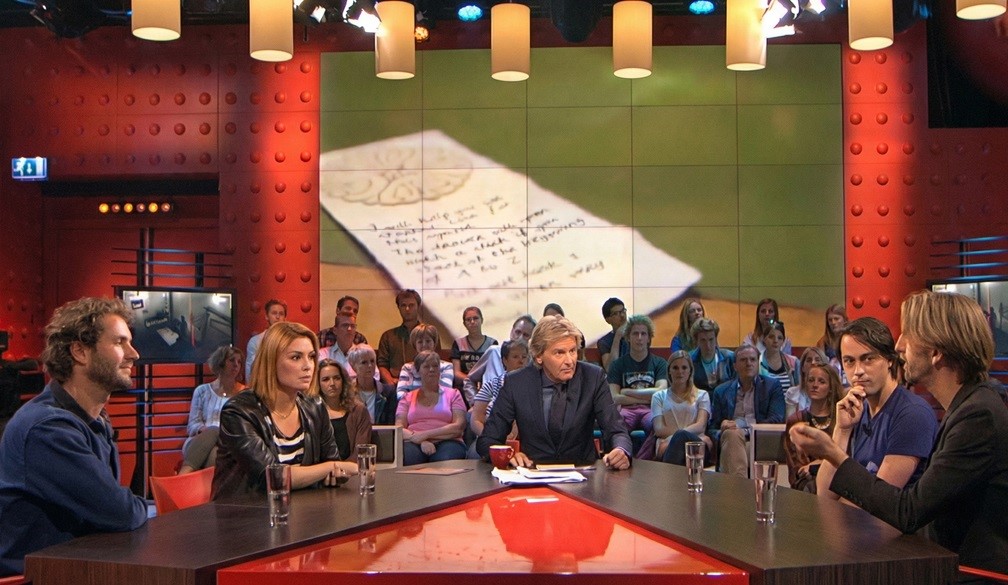
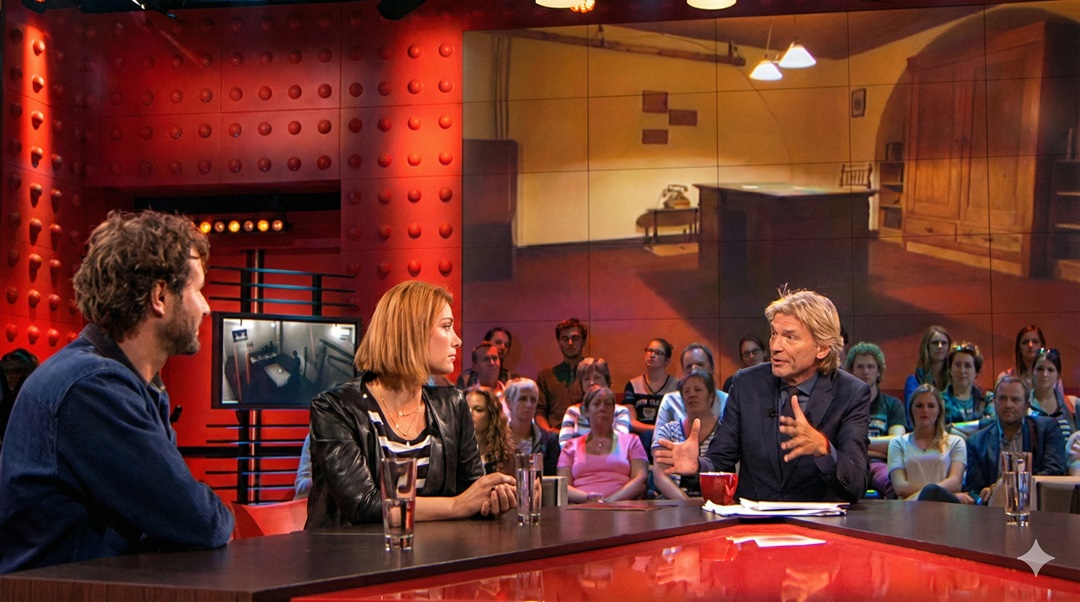
Sherlocked has lived in this real-world overlap since the early days. In fact, one of our first defining moments happened just a week after we opened, when we unexpectedly found ourselves demonstrating escape rooms on one of The Netherlands’ biggest talk shows.
Victor remembers that moment clearly:
“We demonstrated the concept on De Wereld Draait Door… I think it made a massive difference in how embraced the format is in The Netherlands.”
It was surreal to watch an escape room puzzle being solved live on national television, not because it was flashy, but because it looked so strangely ordinary. A table, a host, a puzzle box, and a format no one had words for yet. The fiction behaved like news. The news behaved like fiction. And the country leaned in.
That same blending is now baked into our storytelling DNA.
The Vault Begins Before You Realise It Has Begun

The Vault is where plausibility becomes a living, breathing character. It does not start at a lobby desk or with a cheerful host pointing you to lockers. It begins long before you touch the front door.
After booking, you receive a confirmation email. Then another message arrives, quieter in tone, and suddenly far more intriguing:
Be in this location at this time. Make sure you’re not followed.
Nothing about it mentions “a game,” which is exactly the point. You meet in a real parking garage, not a theatrical replica. You receive a black mission suitcase, the same shape and weight as the ones in heist films. Francine loves it for exactly that reason:
“It’s something you always see in the movies… and then now you can do it yourself.”
From the very first step, reality holds the door open for fiction, and fiction quietly borrows the credibility of reality. It’s hard not to lean in.
The Door in Your Face (Yes, On Purpose)
When you arrive at the next location and knock, an art gallery curator opens the door. Certain guests proudly announce, “We’re here for the escape room.” because that is what every escape room asks you to say.
The curator gives them a calm, professional look and replies:
“There’s no escape room here.”
And she closes the door.
To be fair, we once got a review that simply said, “They were very rude.” We understand how it might feel that way in the moment. But that brief confusion is one of the most important beats in the entire experience. Your brain had been walking along a well-lit, familiar road. That door swing nudges you sideways into something entirely different.
You knock again, this time in character, and the world clicks into place.
When Plausibility Goes Off the Rails, Literally
Blurring fiction and reality is a delicate dance. Most people glide through it with delight. A few stumble. And once, things went spectacularly sideways.
Because The Vault begins in a real parking garage, players sometimes move as if they are already in the heist: whispering, glancing around, clutching that suspicious-looking mission suitcase. One evening, a passerby saw this and did what any reasonable person might do.
They called the police.
“They were acting so suspiciously… someone called the police,” Victor says, still half-amused, half-astonished.
By the time the officers arrived, the players were fully convinced the police were actors. They gave false names. They joked. They remained in character through the entire interaction.
“The police said, ‘No, this is real,’ but they kept bantering,” Francine remembers.
They were taken to the station. Our game master realised the team had vanished, tracked them down, and explained everything. And then came the twist none of us expected.
“The police switched gears in a really nice way… they said, ‘Okay, we’ll play along,’” Victor shares.
Keys were left close enough to “find.” A breakout was staged. The heist resumed. Eventually, the team arrived at Sherlocked, thirty minutes late and absolutely glowing with adrenaline.
Once was enough.
The Building That Makes the Story Believe Itself
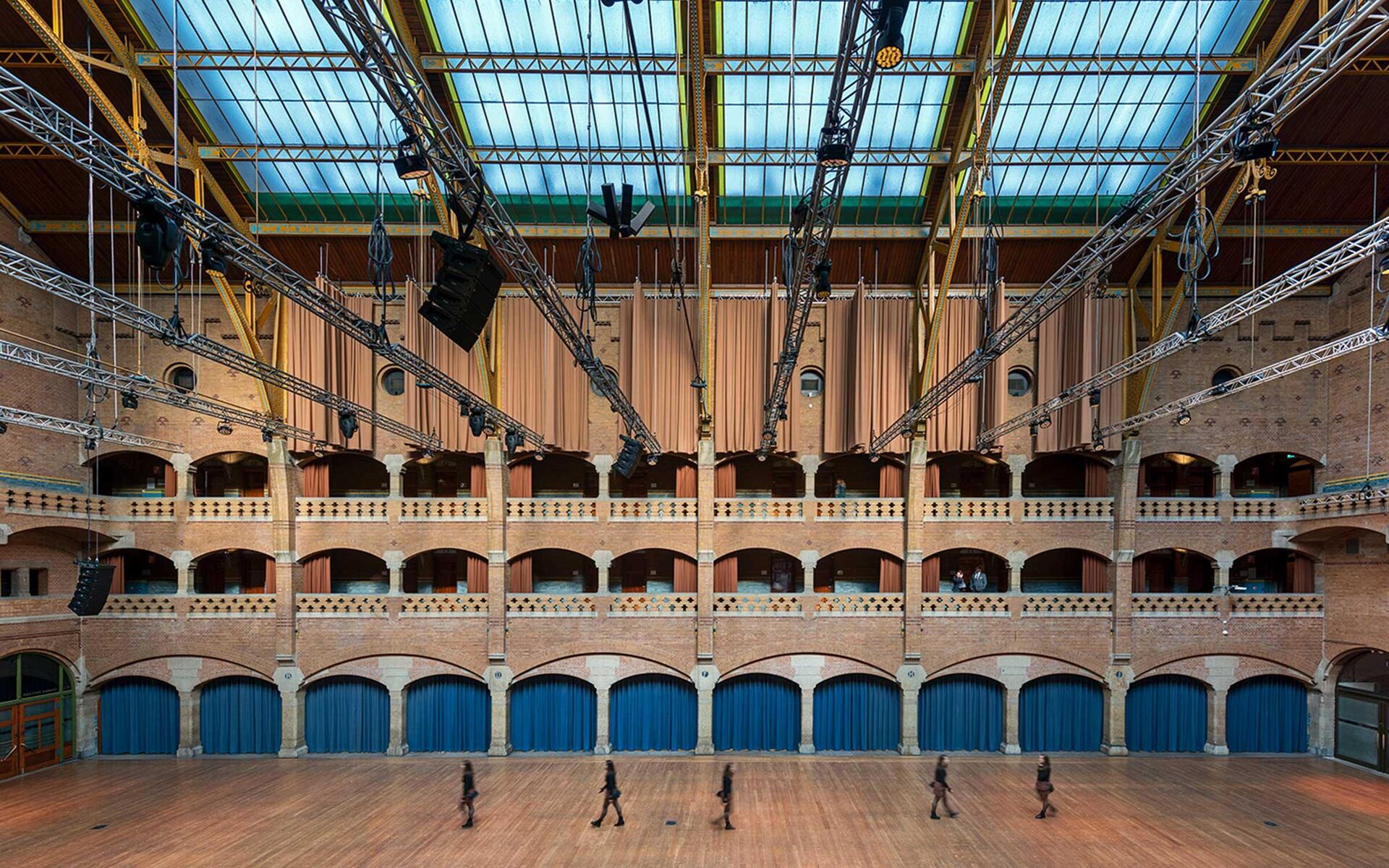
Underneath all the playfulness and mischief is a very practical truth: our experiences work because they are built inside spaces that don’t need to pretend.
The Beurs van Berlage, Amsterdam’s historic stock exchange, is more than a stunning building. It is a character in every one of our stories. Its brickwork, its corridors, its hidden corners carry a weight that prop builders can’t imitate.
“Nothing feels as real as the real thing,” Francine says.
The vault doors in The Vault are not props. They’re original. They are surprisingly heavy and beautifully engineered. The metal is cold, the mechanics precise. You can feel the history in your hands, and your body instinctively trusts what your eyes see.
The Architect draws directly from the building’s heritage too. The room’s hidden office belongs not to a fictional figure but to H.P. Berlage, the real architect who designed the building.
“Story inspiration often comes from the building,” Francine explains. “What kind of room do we have? What story fits this space?”
That choice, to build inside the truth rather than next to it, means you’re not suspending disbelief alone. The world is doing half the work for you.
The Alchemist: When Magic Rests on Something True
.jpg)
Even The Alchemist, our most imaginative experience, is grounded in reality more than people expect. It took four years and 35 artists to bring the vision to life. Renders aligned with reality with uncanny precision, and yet some of its magic comes straight from the real world.
Victor tells a story about one of the room’s crystals. Players gather beams of light from multiple sources to charge it, a moment that feels delightfully cinematic.
“It felt magical and came from movies like The Fifth Element… but then during our perfume workshop with Michael, he mentioned a real method of infusing liquid with intention through light. And that was exactly what we had put into the room.”
So a movie trope quietly fused with an actual homeopathic technique. It’s the kind of overlap that makes the whole experience feel richer, even if you never know the reference.
The Alchemist is full of little anchors like that, book spines referencing real puzzle teams, nods to well-known escape room players, and a room shape inspired by Dumbledore’s office but housed in a space with its own architectural logic. None of these details shout. They simply sit and wait for the curious.
Why We Walk This Thin Line
Sherlocked’s mission has stayed remarkably consistent over the years: to make the world feel a little more magical. Not by pulling you away from reality, but by tilting reality just enough that you see its potential for mystery again.
“We make the world more magical,” Victor says.
The phrase is simple, but for us, it carries ten years of craft, struggle, joy, and care.
We don’t aim to overwhelm players with spectacle. We aim to create moments that feel possible, moments where you sense there might be something extraordinary just beneath the ordinary.
Plausibility is how we get there. It lets the fiction breathe inside the real world. It lets you believe that a parking garage can be the beginning of a heist, that a gallery can be a front for something hidden, that a vault door you touch with your own hands might have held real secrets once.
And if you find yourself at home hours later, still thinking about it, still opening tabs, still chasing those little nuggets of truth, then the story is still alive.
That is the magic we’re after.
The magic that lingers quietly once the door closes behind you.
Table of Contents