.svg)
Book Now
Before we crack open the tale behind our most ambitious heist, here’s the story in one clean glance:
Quick Summary
- The Vault began as a childhood heist fantasy, inspired by films like Ocean’s Eleven, Inception, Entrapment, and The Thomas Crown Affair, stories where cleverness is style and tension is elegance.
- Sherlocked set out to let players live a cinematic heist, not watch one: a 14-chapter break-in inside a real Amsterdam bank vault.
- A hidden lore layer, the Four Families and their powerful artefact, adds myth and mystery beneath the action, giving the heist emotional depth.
- Immersion starts before arrival: players receive in-universe emails, learn to use real dial locks via a secret mobile “training” game, and begin the experience in a real parking garage with a mission suitcase straight out of a film.
- The entrance blends fiction and reality: a disguised gallery door tests whether players stay “in character,” leading to hilariously mixed reactions from confused visitors.
- The room went through months of iterative design and testing, evolving through player quirks, surprises, and accidental discoveries that shaped the final flow.
- The Vault’s realism comes from its authentic location: a historic stock-exchange vault with genuine safes, steel, mechanisms, and atmosphere no set could replicate.
- Every detail, materials, tools, lighting, sound, is crafted for truthfulness, creating a heist that feels fully, unnervingly real.
- The Vault stands apart because it’s a living heist world, tuned over years, shaped by engineering, theatre, storytelling, and player ingenuity.
- Above all, The Vault is a love letter to cleverness and collaboration, built with obsessive craft and a devotion to making impossible-feeling stories real.
There is a certain thrill that lives in the heist genre, that slow rise of music as a crew assembles, the whisper of a plan, the shimmer of a laser grid waiting to be crossed. It’s adrenaline wrapped in elegance. As kids, many of us dreamed of being the ones who slipped past the guards, cracked the code, and walked away with the treasure.
At Sherlocked, we decided to make that dream real.
What began as a childhood fantasy, “you actually wanted to be a burglar… but without the criminal side,” as Victor once said on live television, became one of Europe’s most immersive break-in experiences.
This is the story of how The Vault was built: the influences, the details, the wild player moments, and the creative madness behind turning a historical Amsterdam safe into a living, breathing heist film.
Origins: From Childhood Fantasy to Cinematic Heist
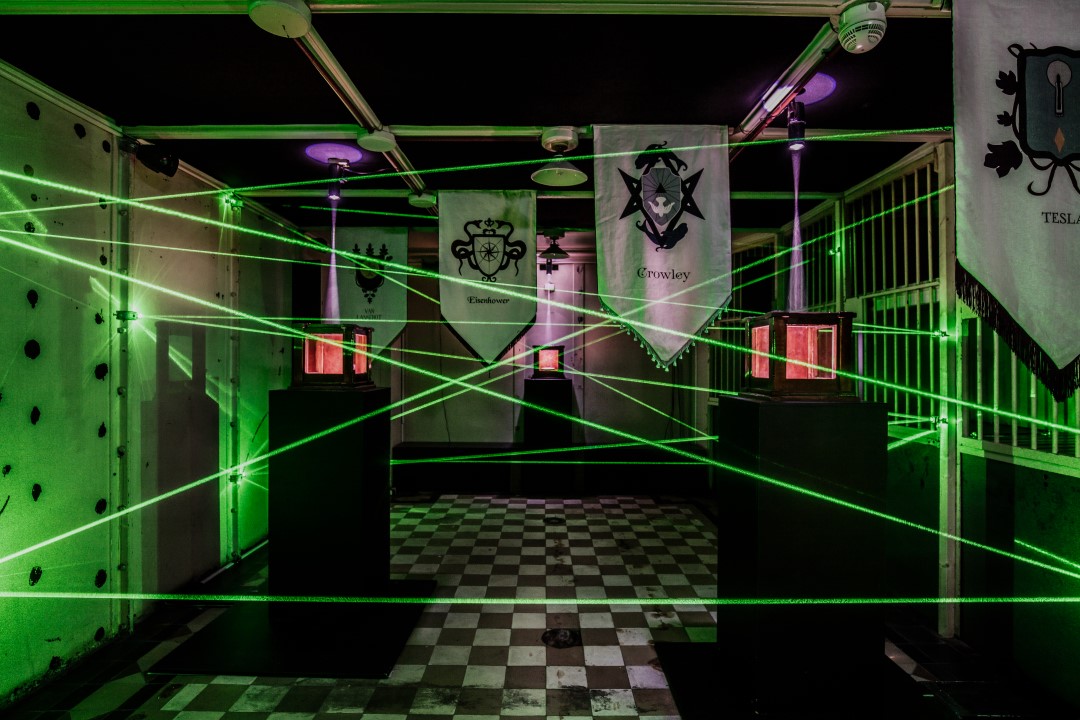
A Childhood Dream Becomes a 90-Minute Masterpiece
The earliest spark behind The Vault was simple: heist films had shaped us.
“For The Vault, there’s the heist genre. So Inception, Thomas Crown Affair, the Ocean series… I love the music, the vibe, the general pacing of that.”, Victor
Those films do something special. They're more than stories of burglary. They're puzzles wrapped in charm. They treat intellect as style. They give us permission to root for cleverness.
From day one, that was our guiding compass.
We wanted players to feel like they’d stepped into those films, not as spectators, but as the crew. The ones who plan, infiltrate, improvise, and slip through the cracks of impossible security. A 14-chapter break-in, set inside a real bank vault, with just 90 minutes before the window of opportunity closes.
When DWDD asked why we built it, Victor said it plainly:
“You’re living a childhood dream.”
And thousands of players have since lived it too.
Heist DNA: Growing Up on Ocean’s, Entrapment, and Inception
The Vault is built from the DNA of the heist genre.
- The smooth confidence of Ocean’s Eleven
- The tension of Entrapment’s laser-dodging sequence
- The elegant thievery of The Thomas Crown Affair
- The dream-logic planning sequences of Inception
We didn’t copy these films. We curated their feeling, the orchestral swell of a plan, the hush before the breach, the playful audacity of trying to outsmart a system built to stop you.
At DWDD, Victor put it perfectly:
“You see those laser beams; you’re not allowed to touch them. And yet you have to go through them… on your way to a treasure.”
The Vault doesn’t refer to those scenes, it lets you play them.
A Hidden Fantasy Layer, The Four Families
People often say The Vault feels unusually “layered” for a heist experience, and they’re right.
Yes, you’re breaking into a real vault…but you are also chasing an artefact born from years of conflict among four secret families, each protecting a fragment of something powerful.
“There’s a little bit of a magical story… these four families coming together to create this very powerful object.”, Victor
This story-within-a-story gave us permission to bend the heist genre into something deeper and stranger. Something that doesn’t just thrill you but pulls you into an old mystery, a riddle of legacy, power, trust.
Players often say, “I didn’t expect that from a break-in.”
That surprise is baked into the design.
Designing a World You Can Step Into
The Story Starts Before You Even Ring the Bell
For most escape rooms, the story begins when you step through the door. For The Vault, it starts the moment you book.
You receive your confirmation email… and then the tone shifts. A new message arrives, asking you to be at a specific location at a specific time. It tells you to make sure you’re not being followed. From that moment on, there is no mention of a “game” or a “booking.” You’re just in contact with people who need something done.
It’s a small design choice, but it gently moves players from “customer” to “accomplice.” By the time you set foot in Amsterdam, you're going to more than an escape room. You’re answering a call.
Training for the Heist (Without Calling It Training)
One of the quietest but most important design decisions for The Vault lives outside the room entirely: a small mobile game.
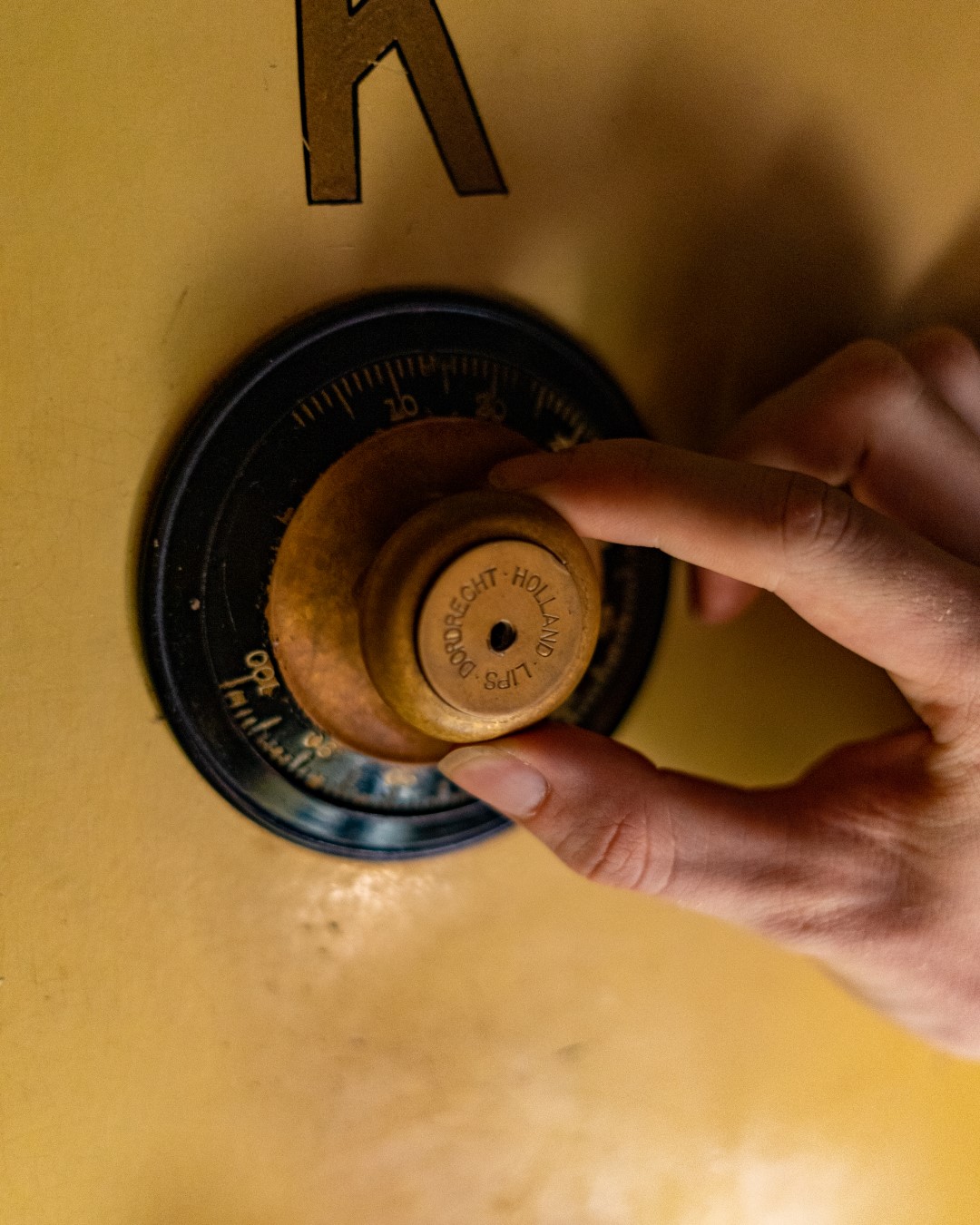
The historical vault complex uses real rotation locks. In The Netherlands, almost no one has grown up using those. In the earliest version of The Vault, people would get stuck just on the motion of opening a dial lock, and the only way through was an instruction sheet on the wall. Everyone hated it.
So we did something more playful. We worked with a young team to build a free 15-minute iOS and Android game that mimics the exact movement of those real locks. You’re just “playing a little app,” but your hands are learning the skill you’ll need later.
Players who try it arrive at The Vault and, when faced with the heavy brass dials, their fingers already know what to do. They’re not being lectured. They’re training for the heist without ever realising it.
The Real World as a Stage
One of the decisions we’re proudest of, and occasionally terrified by, is that The Vault starts in the real world, in a functioning Amsterdam parking garage.
“We actually rent an expensive parking space in a parking garage… it’s almost the rent of a whole escape room.”, Victor
Financially, that’s a ridiculous choice. Creatively, it’s exactly right.
You arrive not at a reception desk, but at a numbered spot, where a matte-black mission suitcase waits for you like something out of Ocean’s Eleven. It’s Francine’s favourite detail.
“I love that we have an actual mission suitcase… something you always see in the movies… now you can do it yourself.”, Francine
The suitcase feels like it was pulled straight from a film, and the moment you pick it up, something shifts. You’re no longer preparing to “play a game”; you’re stepping into a role.
Inside, you find tools, secrets, and puzzles waiting to be discovered. Every object has been chosen to feel just suspicious enough, carrying that mix of tension and possibility that defines a good heist. The case becomes more than a prop; it’s the first promise The Vault makes. The heist has already begun, and you’re holding it by the handle.
Blurring Fiction and Reality at the Front Door
By the time you reach Sherlocked’s actual doorstep, your sense of what’s real has started to wobble. You don’t arrive at a neon “ESCAPE ROOM” sign. You arrive at what seems to be an art gallery.
When players ring the bell and cheerfully say they’re here for “the escape room,” the curator sometimes looks puzzled, apologizes, and closes the door. The trick is to try again in character. Announce a private viewing at the gallery, and suddenly everything lines up.
Most teams catch on quickly and relish the moment they realise they’ve been outplayed by the fiction.
But not everyone reacts the same way.
“We got a review at some point saying, ‘these people are very rude, they closed the door in our face.’ And then we were like, yeah, that was the point.”, Victor
For some, the realism cuts even deeper.
“We had a team that abandoned the quest very early on because they said, this feels so real. We think you actually make us steal something now… They were very afraid that it was a scam.”, Francine
They left. No refund request, no email, just a quiet disappearance. In almost ten years, that’s only happened once. But it’s a powerful reminder of how convincing the setup can be.
Designing and Redesigning: A Living, Breathing Heist
The Vault was not born finished. It went through six to seven months of intensive design, followed by more months of testing, rethinking, and refining.
Designing an experience like this is never a straight line. Escape rooms behave almost like living organisms; they shift and stretch the moment real humans interact with them. What looks perfect on paper can unravel during prototyping. A mechanism everyone loves might reveal an unintended loophole. A brilliant puzzle can fall flat without the right dramatic beat.
Those early months were a dance between precision and unpredictability. We would design something with painstaking care, then watch a test group find a completely new way to use it. Each playthrough revealed another tweak, another adjustment, another little burst of chaos that helped shape the final experience into something resilient and alive.
From that constant negotiation with reality, from all the small surprises and happy accidents, the best stories began to emerge.
Stories From Inside the Heist

When the Amsterdam Police Joined the Game
The Vault famously begins in the real world, and when you invite people to act like burglars, some take that invitation very seriously. One team was moving through the parking garage with their mission suitcase, whispering and plotting like a group straight out of Ocean’s Eleven. A bystander watched their careful choreography, grew suspicious, and called the police.
“They were carrying a briefcase… very suspect looking… someone called the police.”, Victor
When the officers arrived, the team didn’t flinch. Of course the police were part of the heist experience. Of course this was all scripted. So when they were asked for their names, they confidently rattled off fake identities.
“And the police were like, no, this is real.”, Francine
Within minutes, the players were taken to the station and placed into a holding cell, still convinced this was the greatest escape room intro ever designed. Meanwhile, at Sherlocked, the game master stared at an empty start location wondering where on earth their team had gone.
Once the truth became clear, something unexpectedly wonderful happened. The Amsterdam police, as Victor remembers, shifted gears with a surprising sense of humor.
“Amsterdam police… switched gears in a really nice way. They played along.”, Victor
The game master arrived as the “accomplice,” and the officers subtly left the keys within reach. The team broke themselves out of the holding cell, cheering at their own jailbreak, and finally rushed back toward The Vault.
They returned about thirty minutes late, buzzing with adrenaline. One of them summed it up quietly, wide-eyed and breathless:
“Holy shit, this is the most immersive experience ever.”
It was a once-in-a-lifetime moment, the kind of chaotic magic you can’t script and shouldn’t try to recreate. Not at home, and definitely not outside the parking garage.
The Art of Hiding (Poorly)
Hidden inside The Vault is a moment where players must avoid being seen by the guard, and every team finds their own… interpretation of stealth. Over the years, this has become an unexpected tradition: dramatic, creative, and sometimes spectacularly misguided attempts at hiding.
Francine still laughs about one particular photo.
“…heads under the benches, bodies completely spread out… and the guard staring into the camera like ‘what do I do?’”, Francine
Humans are remarkably inventive when the pressure rises, and escape room urgency tends to amplify that instinct. Instead of slipping into the shadows, this team had simply laid themselves flat on the floor, convinced horizontal geometry would save them.
Sam, the guard on duty, stood there in utter disbelief. He looked straight into the camera as if asking the universe for instructions, while the team played dead at his feet like extremely committed houseplants.
Crafting Authenticity: Why It Feels Real
A Real Vault in a Real Stock Exchange
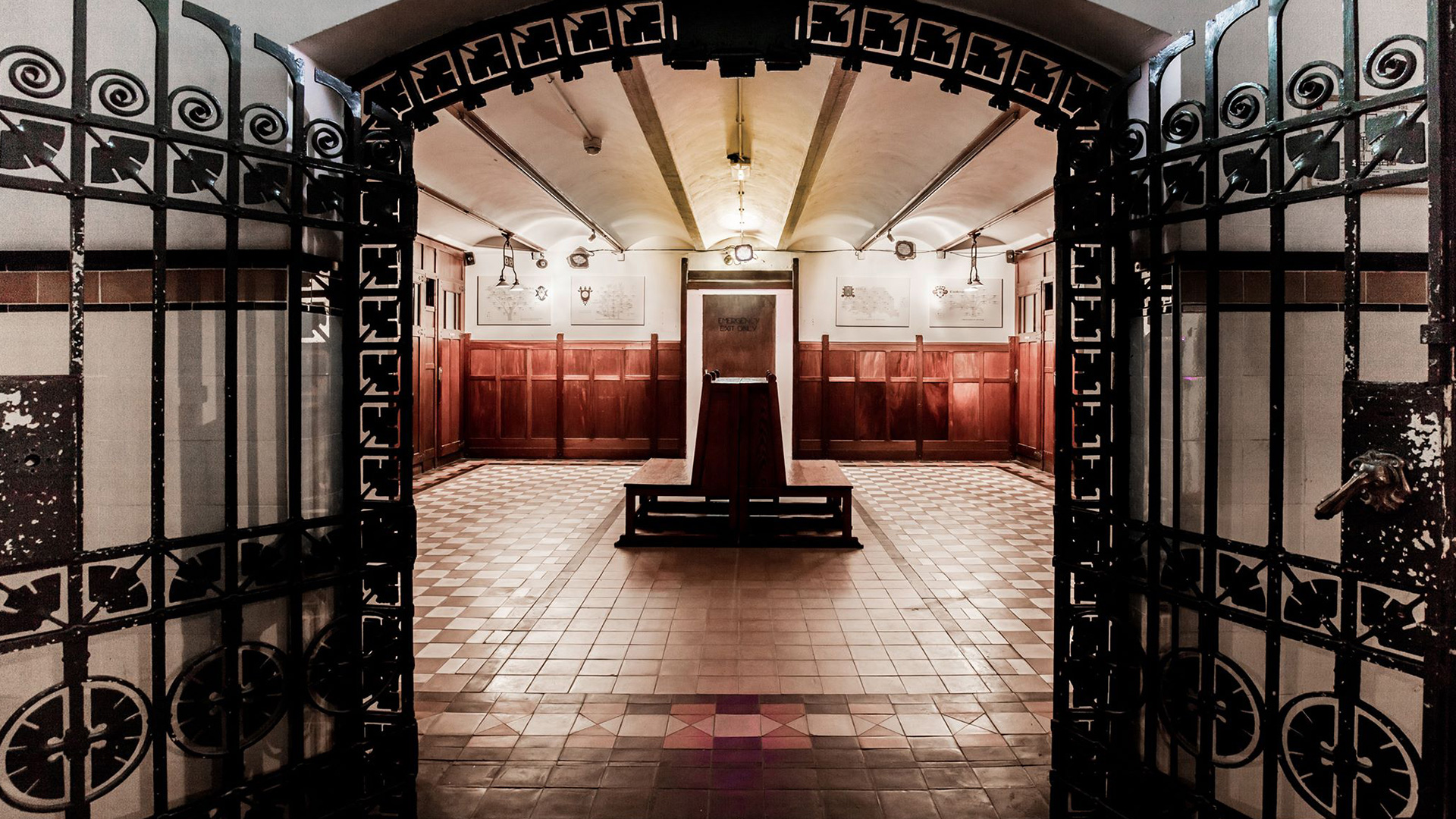
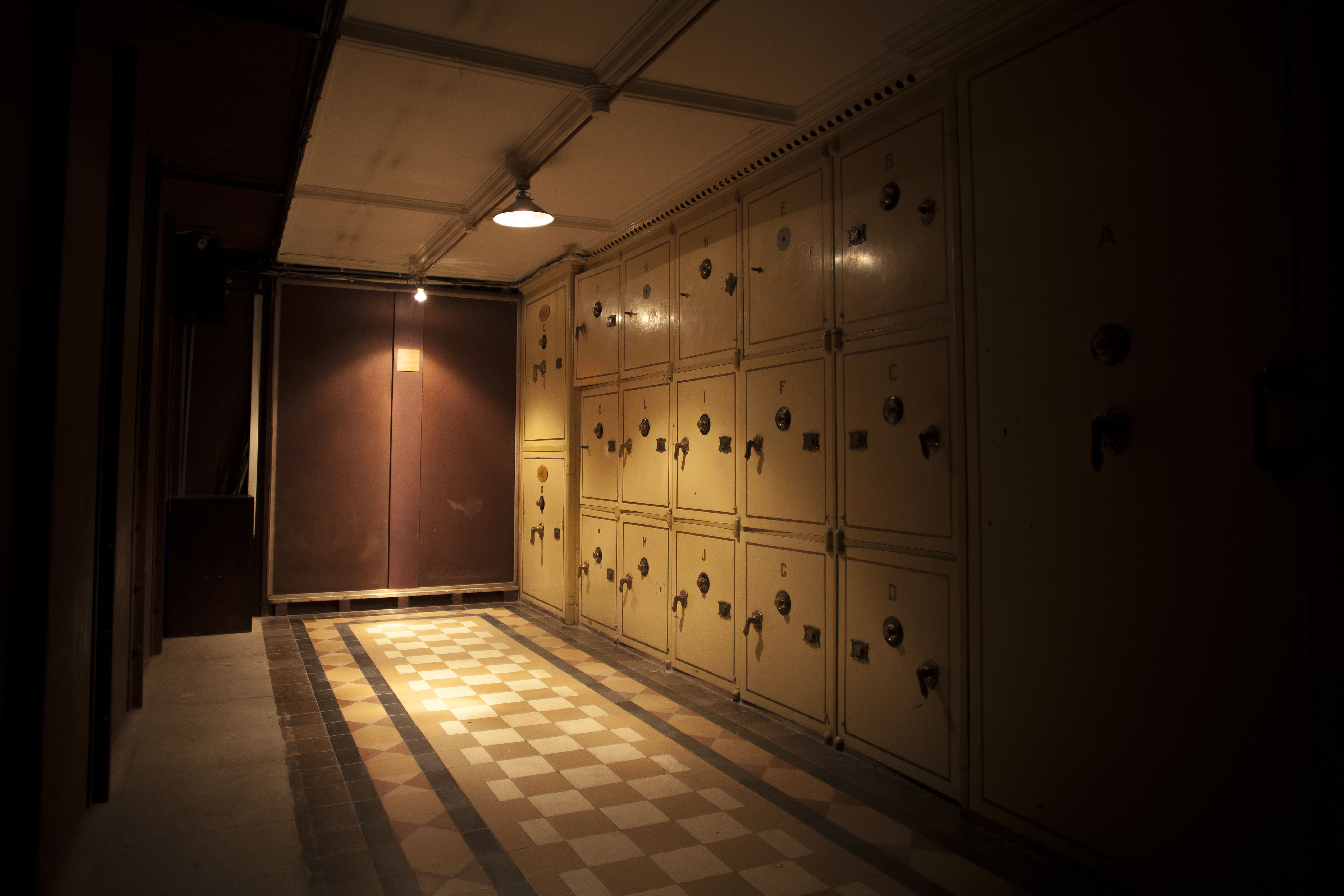
The Vault lives inside the former Amsterdam Stock Exchange, a massive historical building in the dead centre of the city. It’s ten minutes on foot from Central Station, which makes it easy for tourists and locals alike. But the real magic is underground, in the vault complex that used to guard real fortunes.
Designing a heist inside a purpose-built vault means we don’t have to convince you it’s real. The doors are genuinely heavy, the mechanisms genuinely detailed, the corridors genuinely thick with history. We could never have built these vault doors ourselves; even imagining them from scratch would have been a stretch.
Choosing this building comes with a price. The rent is high, the negotiations delicate, and both Sherlocked and the building’s owners are stretching in opposite directions to make it work.
“We pay more rent than any escaper might know… It’s a difficult relationship… but for 10 years, it’s felt very worth it.”, Victor
The trade-off is simple: the space hands us immersion on a silver platter, so we can spend our creative energy not on faking a vault, but on telling a story inside a real one.
Crafting Realism: Why Every Detail Matters
To build a heist that feels real, you need more than clever puzzles. You need materials with weight, metal that clangs, tools that carry a hint of danger, and lighting that knows how to whisper rather than shout. Even the soundscape has a job to do, tightening the air, building tension, guiding players deeper into the story without them fully noticing.
Every detail in The Vault had to be honest. When you open a safe, you should feel the cold heft of steel, not a painted prop. When you cut power to a system, the relays need to fall silent in a way that makes the back of your neck tingle. When you walk through its narrow corridors, you should feel as though you’re stepping through time, not through a set.
We weren’t interested in constructing an imitation of a vault. We wanted the real thing, worn and heavy with its own history. What you play in today is not a façade we built, but a space we restored, a place with a past of its own, now illuminated by the fictional future we’ve layered onto it.
The Mission Suitcase: A Love Letter to Heist Cinema
Francine’s favourite detail says everything about our approach to The Vault. It’s small, iconic, and instantly tells you what kind of story you’ve stepped into.
“I love that we have an actual mission suitcase… something you always see in the movies… now you can do it yourself.”, Francine
The suitcase feels like it was pulled straight from a heist film, and the moment you pick it up, the experience shifts. You’re no longer preparing for a game, you’re stepping into a role.
Inside, players find tools, secrets, and puzzles waiting to be discovered. Every object is deliberately chosen to feel just suspicious enough, carrying that irresistible mix of tension and possibility.
The suitcase becomes more than a prop; it’s the first promise the game makes. A signal that the heist has already begun, and that you are now part of it.
Why The Vault Still Stands Apart

The Vault endures because we never set out to build “an escape room.” From the beginning, the goal was to craft a cinematic heist set in a real location, something with emotional stakes, layered storytelling, and the pulse of the genre films that shaped us.
Over time, it was refined by design, and by the hundreds of players who tested its boundaries and revealed new possibilities. Like a piece of theatre, it was tuned again and again until every moment felt intentional, grounded, and alive within the physical space that holds it.
The result is not a game you merely solve. It’s a world you inhabit. People remember the feeling of The Vault, the instant a plan clicks into place, the breath held in unison, the collective adrenaline of a crew on the brink.
We didn’t want players to witness a heist from the outside. We wanted them to live one from within.
The Vault in 2025 and Beyond
Years after its premiere, The Vault continues to evolve. We refine it, polish it, and tend to its machinery like caretakers of a wonderfully dramatic creature, knowing that every team who enters leaves a mark of their own, sometimes subtle, sometimes unforgettable.
The experience endures because it’s honest. It isn’t performing the idea of a heist or winking at the genre from a distance. It is a heist, built from architecture, theatre, engineering, puzzle craft, and a touch of alchemy.
That combination creates a space where childhood fantasies step into the real world, and the real world occasionally steps right back. It’s a living story, one shaped by the people brave enough to walk through its doors.
Conclusion: A Love Letter to Cleverness
The Vault was built with care, craft, and a deep respect for the intelligence of our players. It’s a celebration of teamwork, tension, elegance, and the playful audacity of trying to steal the impossible.
More than anything, it’s a testament to what happens when you follow the ideas that thrill you, even when they require renting an outrageously expensive parking spot simply because the story demands it.
If you’ve ever wanted to slip into the shadows, crack open a secret, dodge invisible dangers, and walk away with something priceless…
The Vault is waiting. Book now.
Table of Contents