.svg)
Book Now
Quick Summary
Before diving into the full story, here’s a clear snapshot of the key ideas...
- Re-enchanting the world is our guiding star, balancing modern rationality with a much-needed dose of mystery, awe, and the feeling that not everything needs to be explained.
- Authenticity is the secret to true immersion, which is why we use real materials like cold marble and heavy brass to blur the line between fiction and reality until your senses accept the magic.
- We believe play is a serious necessity for adults, offering a space to shed daily roles and rediscover a sense of curiosity, heroism, and shared discovery that often gets lost.
- Building The Alchemist was a four-year labor of love, rejecting the easy path of acquisition to craft a "Magic Room" with thirty-five artists where wonder feels organic and alive.
- Our ultimate goal is to shift your perspective, sending you back into the real world with a renewed gaze that notices the mystery and possibility hiding in plain sight.
People usually come to Sherlocked because they are curious about puzzles, teamwork, or immersive experiences. What often surprises them is not something that happens inside the room, but something that happens afterward, when they step back into the city and notice that the world feels just a little different than before.
The Mission: Re-Enchantment

In the early days of Sherlocked, the founders were not trying to build a business category. They were responding to a shared observation about modern life. The world had become incredibly clear, rational, and explainable. Almost nothing was allowed to remain mysterious.
Co-founder Tristan Hupe described Sherlocked’s purpose as “re-enchanting the world.”
Victor van Doorn, Creative Director and Co-Founder, later rephrased it as “making the world more magical,” not to soften it, but to make the idea easier to communicate.
The goal was simple. Return a sense of wonder to people who rarely get to experience it.
Victor shares how, historically, rationality became the dominant lens and some magical thinking was lost; however, he believes that humanity still craves the mysterious, the search for moments that go beyond logical thought.
Sherlocked exists because that need never disappeared.
Living in a Fully Explained World
We live in a time where almost everything can be explained, measured, or optimised, often within seconds and from the device in our pocket. While that has brought comfort and progress, it has also made genuine surprise increasingly rare.
Victor van Doorn, co-founder of Sherlocked, once put it simply:
“People still need moments they can’t fully rationalise. Not confusion, but awe.”
The mission is not to reject rationality, but to balance it. To create experiences that reintroduce mystery in a way that feels grounded rather than fantastical.
Designing for Awe
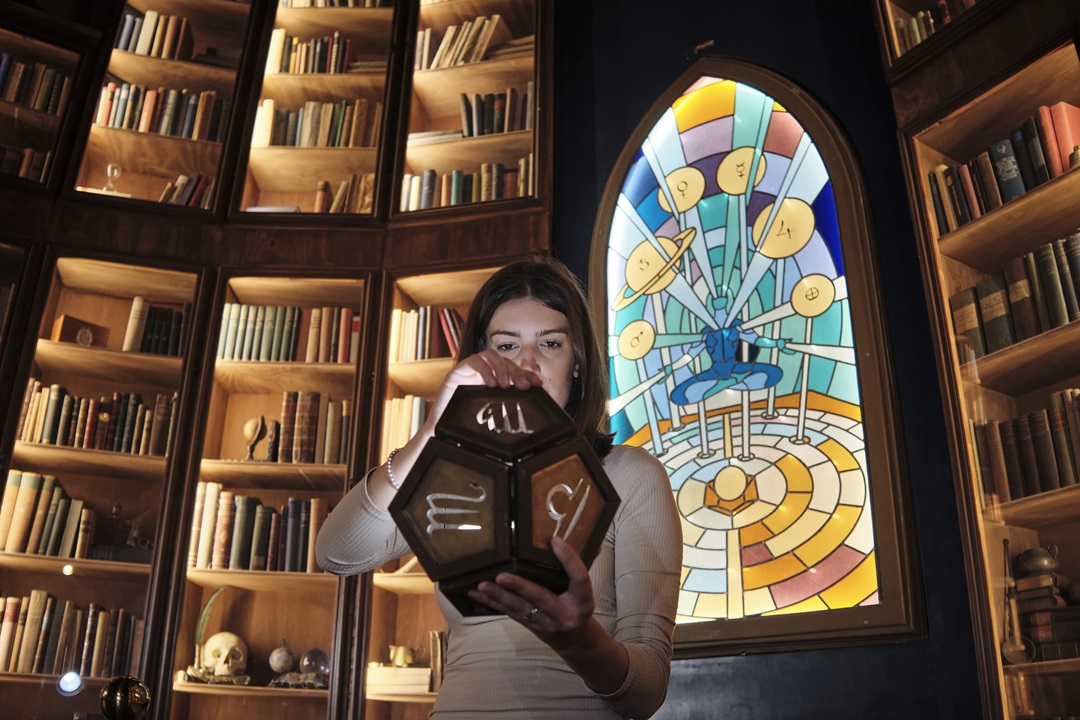
Awe is a fragile emotion, and it cannot be forced through spectacle alone. Sherlocked does not aim to overwhelm players, but to gently guide them into situations where wonder can emerge naturally.
That means designing experiences that feel believable, coherent, and internally logical, so that when something unexpected happens, players accept it rather than question it. The result is not disbelief, but curiosity.
And to achieve that, the boundary between fiction and reality has to soften, thus making the impossible possible.
How Sherlocked Blurs Fiction and Reality

In many forms of entertainment, the transition into a fictional world is clearly marked and deliberately theatrical. Sherlocked takes a different approach, aiming for a smooth transition where players feel involved before they consciously register that the experience has begun.
The goal is not to announce the start of the game, but to let the story quietly take hold.
Authenticity as a Design Choice
This approach depends heavily on authenticity. Sherlocked avoids elements that remind players they are in a constructed environment, such as written instructions or props that look durable rather than believable.
“We like blurring the line between reality and fiction,” Francine explains. “These stories, the materials are real. There are no closed envelopes that say, open me when ready.”
If an object exists in a room, it must belong there. If a surface looks like stone, it should feel like stone, because the body often notices inconsistencies long before the mind does.
The Importance of Physical Reality
In The Alchemist, the fireplace is made of real marble instead of wood or plastic. The decision was not about visual realism, but about touch, because the cold surface quietly confirms the space as real.
These details remove friction from the experience. When players stop questioning the environment, they become free to engage with it fully.
The Vault as a Grounded World
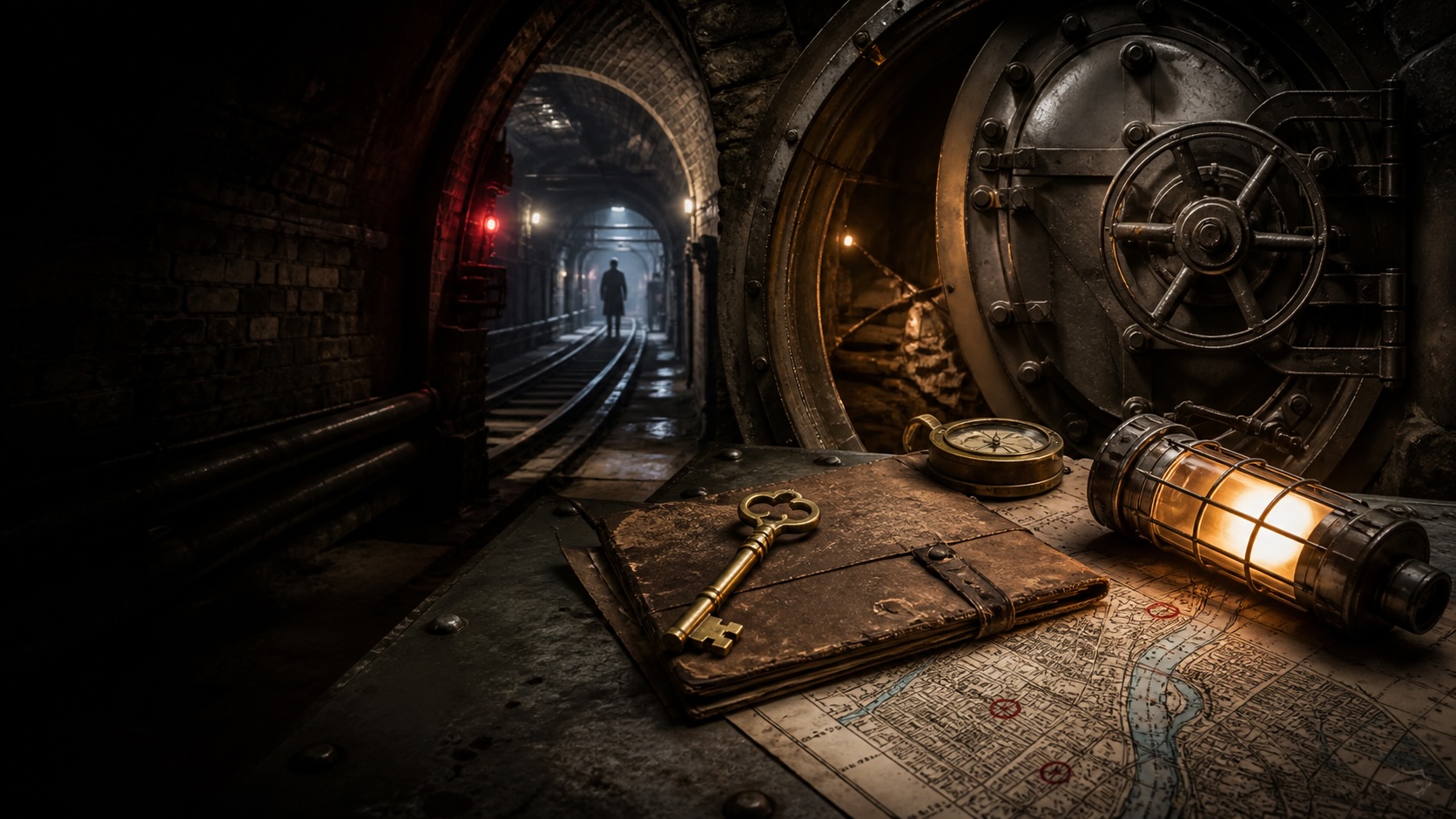
The Vault is one of the clearest expressions of this philosophy. The experience takes place inside a real historic vault complex in Amsterdam, complete with heavy brass doors and the unmistakable presence of a space that once protected something valuable.
Immersion begins before arrival, through messages that introduce secrecy and caution, shaping expectations long before players see the location. By the time they arrive, they are already participating.
At the door, an actor playing an art curator insists that no escape room exists at all, turning players away unless they follow the cover story. This moment sets the tone, making entry part of the narrative rather than a formality.
When the vault doors finally close, the line between reality and fiction has already blurred.
Play as a Serious Tool
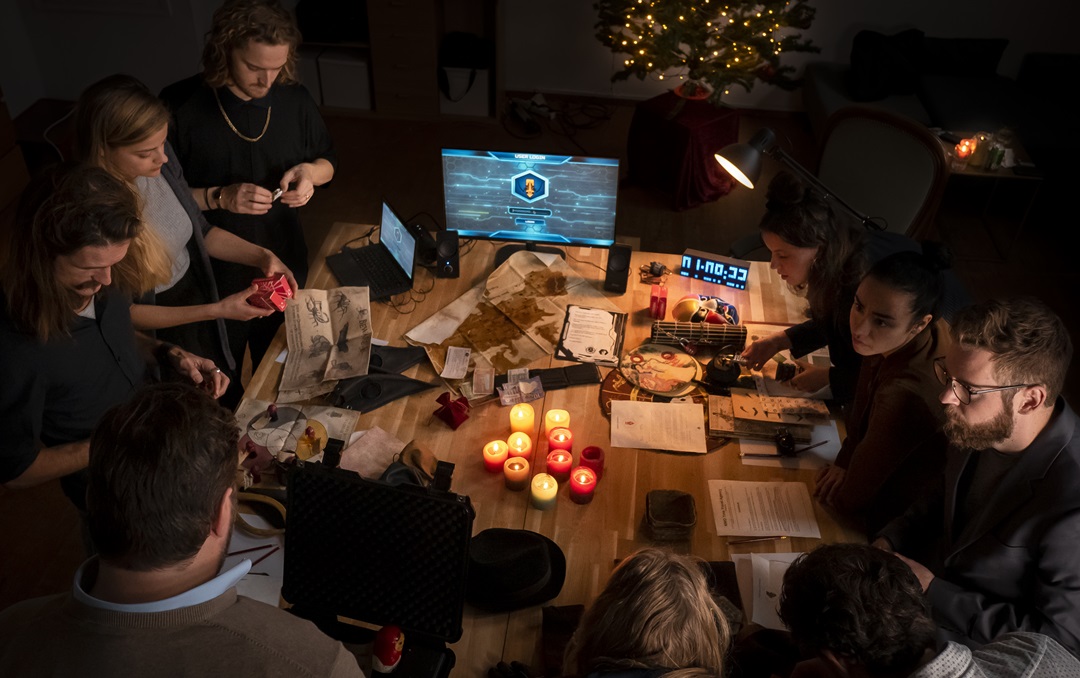
Alongside mystery, play is a central pillar of Sherlocked’s thinking. Francine, with her background in sociology, often reflects on how quickly society discourages play once people reach adulthood.
Children are encouraged to explore and learn through play, but adults are expected to sit still, listen carefully, and avoid mistakes. The assumption is that play is no longer useful.
Francine strongly disagrees.
Getting Adults to Play Again
“What makes me very passionate about what I do is that I can get adults to play again,” Francine says. “And I can get adults to develop and explore their different identities, in which they can feel like the hero in their own story.”
In a playful environment, adults often behave differently than they do in daily life. They become more curious, more collaborative, and more willing to try something without knowing the outcome.
Sherlocked designs its experiences to encourage this mindset, not by telling players how to act, but by creating worlds that reward curiosity and shared discovery.
Trying on New Roles
Within a team, people naturally slip into patterns, often shaped by their work or social roles. Inside a mystery, those patterns can shift.
Someone who rarely leads may take initiative, while someone who usually controls the process may discover the value of observation. These moments allow players to experience themselves differently, even if only briefly.
Francine hopes this sense of possibility carries beyond the game. “I want them to feel like there’s more mystery in the world than they previously thought there was,” she explains, not only in hidden rooms, but in people and in themselves.
The Alchemist and the Idea of the Magic Room
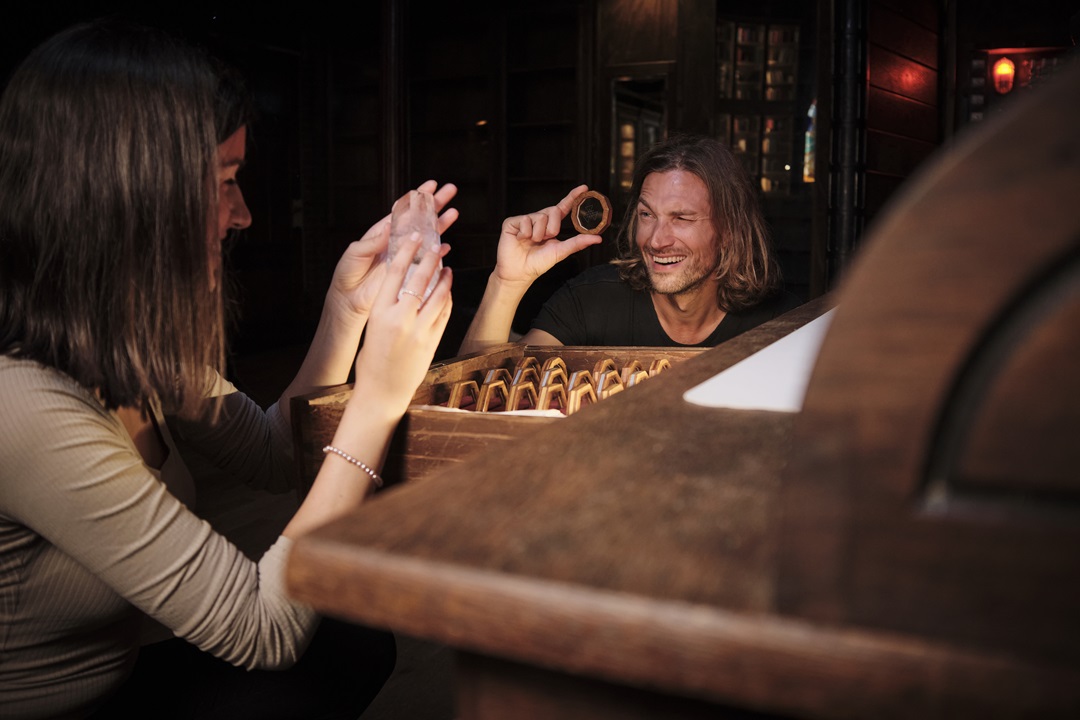
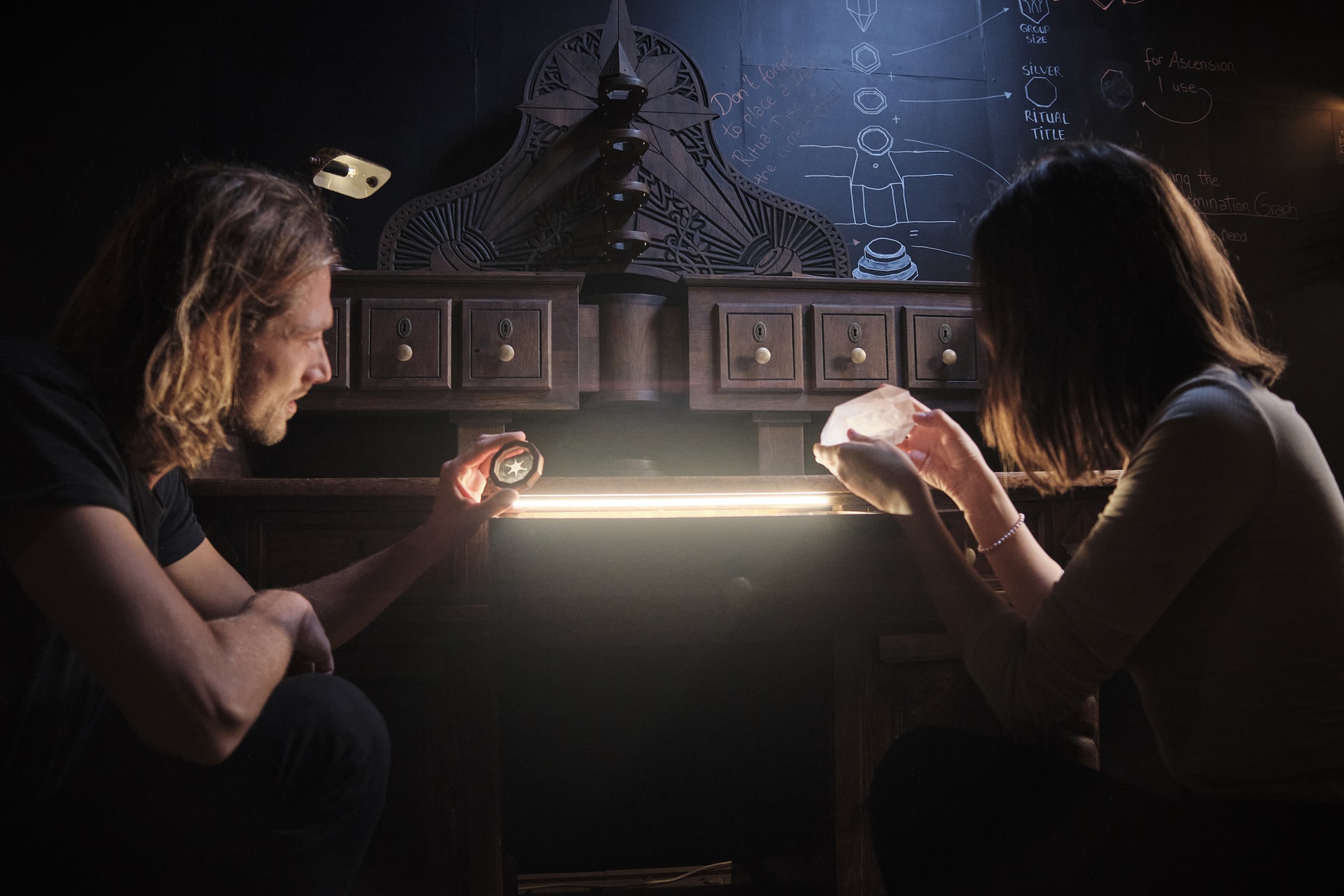
If Sherlocked’s mission were distilled into a single experience, it would be The Alchemist. For years, the founders talked about building what they called the Magic Room, a place where wonder could exist without irony.
The ambition was not to create something bigger or louder, but to create a space where impossible moments felt calm, grounded, and strangely logical.
Choosing the Harder Path
In 2019, Sherlocked received an acquisition offer that promised growth and security. At the same time, Victor realised that a corporate structure might limit the creative freedom required to build The Alchemist in the way the team envisioned.
Turning the offer down was a practical decision rooted in long-term thinking. The Magic Room needed time, risk, and a level of care that could not be rushed.
Four Years of Making Something That Holds
The Alchemist took four years to complete and involved thirty-five artists, engineers, and makers, each contributing their own craft. The process was slow and complex, but it allowed the experience to develop organically.
Players often describe the space as a wonder factory, not because it constantly demands attention, but because it responds in ways that feel alive. Objects reveal hidden logic, and the environment seems to listen as much as it reveals.
Nothing announces itself as a trick. Everything waits to be discovered.
Why Re-Enchantment Matters
Sherlocked is not trying to help people escape reality. It is trying to return them to it with a slightly altered perspective, one that allows room for curiosity, mystery, and wonder.
Re-enchantment is not about fantasy, but about attention. It is about noticing what is possible when certainty loosens its grip, even briefly.
When someone leaves a Sherlocked experience feeling more curious than when they entered, the mission has done its work. The world has not changed, but the way it is seen has.
And sometimes, that is enough to make it feel magical again.
Table of Contents