.svg)
Book Now

Quick Summary
Before diving into the full story, here’s a clear snapshot of the key ideas:
- Team building strengthens relationships, helping individuals become a cohesive and collaborative team.
- Strong communication improves performance, as open dialogue reduces misunderstandings and friction.
- Trust is the hidden engine of teamwork, allowing people to share ideas, take risks, and rely on each other.
- Morale and engagement increase, because employees feel connected to their colleagues and purpose.
- Collaboration sparks creativity, bringing different perspectives together to solve problems faster.
- Productivity rises in high-trust teams, with research showing significantly higher performance.
- Team building is a continuous process, not a single event or occasional workshop.
- Well-designed activities strengthen bonds, especially when they involve problem-solving and shared challenges.
- Remote and hybrid teams need intentional connection, since casual interactions happen less naturally.
- Thoughtful leadership and clear goals help teams stay aligned and effective over time.
Something curious happens when a group of people truly starts working together.
Conversations become easier. Ideas bounce around the room with a kind of momentum. Problems that once felt heavy suddenly become solvable. Not because the work changed, but because the people did.
That quiet shift is what team building is really about.
As Sherlocked's co-director and lead experience designer Francine Boon often observes:
“A team doesn’t suddenly appear because people share a meeting room. It forms through small moments of trust and discovery.”
Most organisations think of team building as a one-off activity. An afternoon game, a workshop, maybe an escape room. But in reality, team building is closer to a craft. A slow kind of alchemy where trust, communication, and shared experiences gradually turn individuals into a team.
In this guide, we’ll explore what team building actually means, why it matters so much in the workplace, and how organisations can nurture stronger, more resilient teams.
If you're curious about the deeper psychology behind it, our guide on The Science of Team Building explores why collaboration changes how people think and behave.
Some leaders even ask a bigger question first: Is Team Building Necessary for Corporate Teams?
What is Team Building, Really?
At its simplest, team building is the process of helping a group of individuals learn how to work together.
That sounds obvious. But the reality is a little more nuanced.
A team is more than a collection of people with the same job title or department. It’s a network of relationships. People who understand how each other thinks, who trust each other’s intentions, who know when to step forward and when to step back.
Team building is the set of experiences, activities, and habits that strengthen those relationships.
Sometimes that means structured workshops or training sessions. Sometimes it looks like collaborative problem-solving games. And sometimes it’s simply creating space where colleagues can interact outside their usual routines.
The goal is always the same: help people connect, communicate, and collaborate more effectively.
Why Team Building Matters in the Workplace
Workplaces often focus on processes, systems, and productivity metrics. Yet most challenges at work are rarely technical.
They’re human.
Miscommunication, unclear expectations, lack of trust. These small frictions can quietly slow a team down. Team building addresses those invisible barriers by strengthening how people interact with each other.
Let’s look at some of the ways it makes a difference.
Better Communication
Communication is the nervous system of any team.
When people feel comfortable speaking openly, ideas travel faster and problems surface earlier. Team building activities create low-pressure environments where colleagues can practice both verbal and non-verbal communication.
Over time, that openness spills back into daily work.
Stronger Collaboration
A good team knows how to combine different strengths.
Some people are analytical. Others think visually or creatively. When collaboration works well, those differences become an advantage rather than a source of friction.
Team building challenges often require groups to solve problems together, which helps individuals learn how to use each other’s abilities.
Trust Between Colleagues
Trust is often invisible, but you feel its absence immediately.
Teams with low trust second-guess each other. Information gets withheld. Decisions slow down.
Shared experiences, especially those involving cooperation or challenge, help build trust naturally. People begin to rely on each other and develop confidence in the team as a whole.
Francine describes it this way:
“When people solve something difficult together, even in a playful context, they start seeing each other differently. Colleagues become allies.”
Higher Morale
Work becomes lighter when people enjoy the company around them.
Team building creates moments of connection that break the routine of daily tasks. A simple shared success or laugh can do more for morale than a dozen motivational emails.
Employees who feel connected to their colleagues are also more engaged and motivated in their work.
Greater Productivity
When communication flows and trust is strong, productivity follows.
Research consistently shows that high-trust organisations outperform low-trust ones. Employees in such environments report significantly higher productivity, often around 50 percent higher.
The reason is simple. Less time is spent navigating misunderstandings or friction.
Better Problem Solving
Complex problems rarely have one correct answer.
Teams that collaborate effectively can combine perspectives and arrive at stronger solutions. Problem-solving activities in team building environments encourage creative thinking and experimentation.
They allow people to approach challenges from angles they might not consider alone.
Stronger Company Culture
Culture is not defined by mission statements. It’s defined by everyday interactions.
Team building reinforces the kind of culture an organisation wants to create. Whether that culture values curiosity, collaboration, or resilience, shared experiences help bring those values to life.
Connection for Remote Teams
Remote work changed how teams interact.
Without hallway conversations or spontaneous coffee chats, relationships can weaken over time. Intentional team-building moments help recreate those connections in distributed teams.
They remind people that behind every screen is a human being.
Cross-Department Collaboration
Team building can also bridge gaps between departments.
When people from different teams work together in a relaxed setting, the invisible walls between departments start to soften. Later, when collaboration is required at work, those connections already exist.
Retention and Employee Loyalty
People rarely leave jobs purely because of tasks.
They leave when they feel disconnected. When employees feel part of a supportive team, they are far more likely to stay with an organisation.
Personal Growth and Well-Being
Finally, teamwork supports individual growth.
Working closely with others helps people develop communication skills, confidence, and emotional resilience. It also reduces stress, because challenges are shared rather than faced alone.
For organisations thinking more strategically about these outcomes, our guide on The Benefits and ROI of Team Building explores how stronger teams translate into measurable results.
How Strong Teams Are Built
Strong teams rarely appear overnight.
They emerge gradually through a combination of leadership, trust, and shared purpose. Think of it less like assembling machinery and more like tending a garden. The conditions have to be right.
Here are some of the foundations that help teams grow.
A Clear Vision
People work better when they understand why their work matters.
Teams need clear goals and direction. When individuals see how their contributions connect to a larger purpose, motivation increases and collaboration becomes easier.
Leadership That Builds Trust
Leadership sets the emotional tone for a team.
Good leaders create clarity and provide support, but they also give people room to take ownership of their work. Trust grows when leaders encourage autonomy while remaining approachable.
Open Communication
Misunderstandings often begin with silence.
Regular check-ins, honest feedback, and accessible communication channels allow teams to stay aligned. The goal is not constant meetings but clarity.
Psychological Safety
People do their best thinking when they feel safe sharing ideas.
Psychological safety means team members can voice concerns, propose unusual ideas, or admit mistakes without fear of embarrassment or punishment.
This environment encourages creativity and experimentation.
Collaboration and Inclusion
Diverse perspectives strengthen teams.
Encouraging participation from all members ensures that decisions benefit from a wider range of experiences and viewpoints.
Continuous Growth
Teams evolve, and learning should evolve with them.
Training, mentorship, and skill development keep teams curious and adaptable. It also signals that the organisation values growth.
Recognition and Appreciation
A simple acknowledgement can go a long way.
Celebrating achievements, both big and small, reinforces positive behaviours and strengthens morale.
For organisations designing structured programs around these principles, our guide on Corporate Team Building Best Practices explores how to turn these ideas into sustainable team strategies.
Common Mistakes in Team Building
Team building is powerful, but it’s also easy to misunderstand.
Many organisations treat it as a quick fix. A single event meant to magically repair deeper issues. When that happens, the effort often falls flat.
Here are a few pitfalls that tend to appear.
Treating It as a One-Time Event
A single workshop rarely transforms a team.
Real change happens through repeated interactions and shared experiences over time.
Poor Communication
If communication problems exist in daily work, they will surface during team-building activities as well.
Ignoring these issues simply delays them.
Lack of Clear Goals
Activities without purpose can feel random.
Teams benefit most when exercises connect to specific goals, such as improving communication or problem solving.
Excessive Competition
Friendly competition can energize a group. But when it becomes the focus, it can create division instead of unity.
Ignoring Individual Strengths
Every team member brings different abilities.
When activities or roles fail to reflect these differences, opportunities for collaboration are lost.
Waiting Until Problems Appear
Teams should strengthen relationships before conflicts arise.
Preventative team building is far more effective than crisis management.
Examples of Effective Team-Building Activities
Not all team-building activities are created equal.
The best ones encourage participation, curiosity, and shared problem solving. They give teams something tangible to work toward together.
Here are a few examples that organisations often use.
Problem-Solving Activities
Challenges that require logic and collaboration are particularly powerful.
Escape rooms are a well-known example. Teams must communicate, share clues, and combine insights to succeed.
As Francine explains:
“In an escape room, you’re put in a fictional situation where the stakes feel high because of the time pressure and immersion. But at the same time, you know it’s a game. That combination creates a perfect environment to explore, fail, and simply be yourself.”
Scavenger hunts or collaborative puzzles work similarly, encouraging groups to think collectively rather than individually.
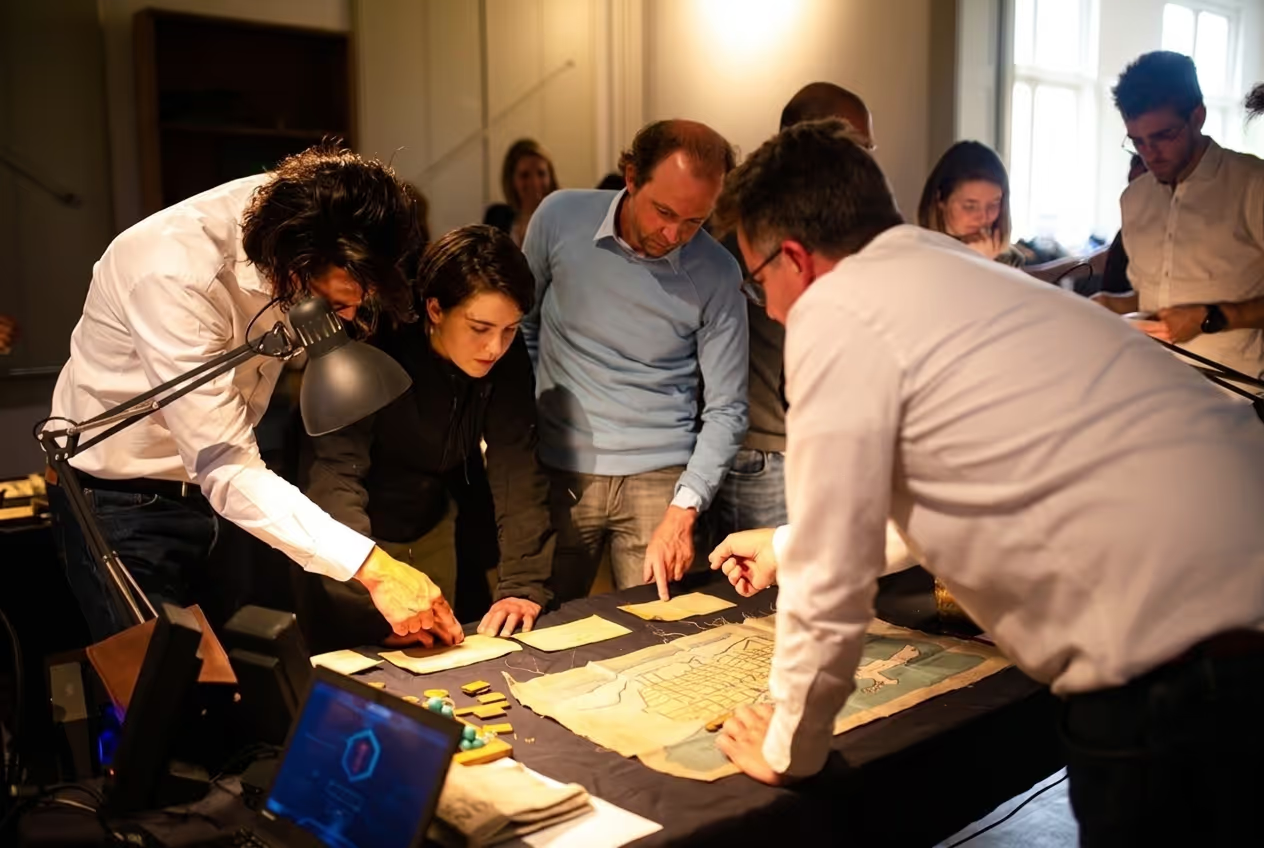
At Sherlocked, experiences like Time Crimes, our team-building game in Amsterdam, push this even further. Our escape rooms in Amsterdam, including The Vault, The Architect, and The Alchemist, create a similar dynamic on a smaller scale. As teams explore hidden rooms and unravel layered puzzles, something interesting tends to happen along the way: hierarchies soften, communication becomes sharper, and unexpected leaders emerge.
Communication Exercises
Some activities focus specifically on how information flows.
In blind drawing exercises, one participant describes an image while another attempts to draw it without seeing it. It’s a surprisingly revealing exercise in clarity and listening.
Simple name games or passing challenges can also strengthen group awareness and attention.
For teams looking for lighter exercises, simple Team Building Games and Icebreakers can open communication quickly.
Creative Challenges
Creativity often unlocks new energy within teams.
Office Olympics, cooking challenges, or building exercises invite participants to experiment, laugh, and collaborate in ways they might not normally do at work.
Relationship-Building Activities
Not every activity needs to involve puzzles or challenges.
Sometimes the goal is simply connection. Trivia quizzes, book clubs, or group storytelling sessions help people learn more about each other as individuals.
Smaller teams often benefit from more intimate activities like storytelling, quizzes, or reflective exercises. If your group is small, you might explore 10 Team-Building Activities for Small Teams Under 10 People.
These moments build the social fabric that supports teamwork later on.
For teams that enjoy physical challenges, outdoor team-building activities can introduce movement, nature, and shared achievement into the experience.
The Future of Team Building
Workplaces are changing, and team building is evolving alongside them.
Several trends are beginning to shape how organisations bring teams together.
Hybrid and Technology-Enhanced Experiences
As remote and hybrid work become common, activities increasingly blend physical and digital participation.
Virtual platforms, interactive games, and immersive technologies such as augmented reality are expanding what team experiences can look like.
Distributed teams require more intentional connection. Our guides on How to Build Team Cohesion in a Remote Work Environment and Virtual Team Building Activities explore ways to recreate those shared moments online.
A Focus on Well-Being
Many organisations are shifting toward activities that support both mental and physical well-being.
Mindfulness sessions, outdoor challenges, and wellness initiatives are becoming part of team-building strategies.
Inclusion and Diversity
Modern teams are diverse, and successful activities reflect that.
Inclusive design ensures everyone feels comfortable participating and that different perspectives are valued.
Personalized Experiences
Teams are unique ecosystems.
Rather than generic workshops, organisations increasingly look for experiences tailored to their team’s size, dynamics, and goals.
Best Practices for Effective Team Building
A little preparation can turn a simple activity into a meaningful experience.
Here are a few principles that help.
Start With Clear Goals
Decide what the team should gain from the activity. Improved communication? Stronger relationships? Better collaboration?
The objective shapes everything that follows.
Understand Your Team
Team size, personalities, and work style all influence which activities will resonate.
An introverted team might prefer problem-solving challenges, while others thrive in energetic competitions.
Plan the Logistics
Set a timeline, determine the budget, and assign responsibilities if multiple people are involved in organising the event.
Clear planning prevents unnecessary stress.
Reflect Afterwards
The learning doesn’t stop when the activity ends.
Encourage teams to reflect on what they experienced. What worked well? What surprised them? Those insights help transfer lessons back into daily work.
Final Thoughts
At its heart, team building is about people.
It’s about the quiet moment when a colleague realises they can rely on someone else. The shared laugh after solving a tricky challenge. The spark of clarity when a group suddenly sees a solution together.
Those moments accumulate. As Francine puts it,
“The real magic isn’t the puzzle itself. It’s the moment a group realises they solved it together.”
Over time, they transform a group of coworkers into something far more powerful. A team that trusts each other, communicates openly, and faces challenges with a shared sense of purpose.
If you’re curious how these principles play out in real organisations, we’ve analysed a few case studies of successful team building, which show how teams have used immersive experiences to strengthen collaboration.
You might be surprised how quickly the chemistry begins to change.
Table of Contents