.svg)
Book Now
Picture a Thursday at five. A team walks through our doors with ties loosened and phones finally face-down on the bar. They have already survived eight hours of meetings, decisions, and one too many reply-all emails, and now they are somehow supposed to have fun. This is one of the most specific audiences in experience design, and it is one we think about constantly.
Victor van Doorn, our co-founder and creative director, and Francine Boon, our co-director and lead experience designer, have spent twelve years studying how different people play. What follows is the thinking behind how we design corporate escape rooms, as entertainment, of course, but also as a small act of hospitality for the depleted human brain.
Quick Summary
Before diving into the full story, here's a clear snapshot of the key ideas worth carrying with you.
- Tired teams need different design: corporate groups arrive at Sherlocked straight from work, mentally depleted, and we design specifically for that state. We call it the 5 PM Brain.
- Confidence beats challenge: puzzles that make a team feel capable together do more emotional work than puzzles that push them to their limit.
- Humor dissolves hierarchy: a funny, lighthearted story softens office dynamics faster than any structured team-building exercise we have ever seen.
- Historical accuracy and silliness can live together: our recent 17th-century ship game, Parlay, was carefully researched and gleefully absurd at the same time.
- Letting go of strict realism is liberating: loosening our usual grip on plausibility opened up one of the most joyful design processes in our twelve years as a studio.
Why Corporate Escape Rooms Need Different Design
Corporate escape rooms need different design because the audience differs in more than size or composition. It differs in state. By late afternoon, the focus and patience people normally bring to a puzzle have been quietly eroded by the working day, and pretending otherwise leads to bad design.
"The biggest difference for designing for companies is that we have to take into account that they often come play after a busy workday," Francine explains. "So they come to us at around five after their brain is already a bit fried."
This is what we call designing for the 5 PM Brain. The whole idea is to meet people exactly where they are, rather than where we wish they were.
Why We Design for Confidence, not Challenge
The classic escape room instinct is to reward persistent, clever minds with layered ciphers and puzzles that slowly unspool across an entire room. For an enthusiast who has been looking forward to the experience all week, that is exactly right.
For a team of colleagues who just sat through a quarterly review, the same design can quietly tip the evening into frustration.
Our intuition for corporate groups goes the other way.
"We still want them to have fun," Francine notes. "So we make the puzzles in a way that we boost their confidence, in how they can still solve things."
The shift sounds small, but it changes the entire emotional shape of the game. Instead of designing puzzles that test, we design puzzles that reward. Every step forward feels earned, every solved clue carries a small surge of shared pride, and the group's energy rises rather than drains.
By the time the final mechanism clicks into place, the room has done something a day of back-to-back meetings could not. It has turned a group of individuals into a team that actually feels like one.
How We Make Corporate Escape Rooms Actually Fun
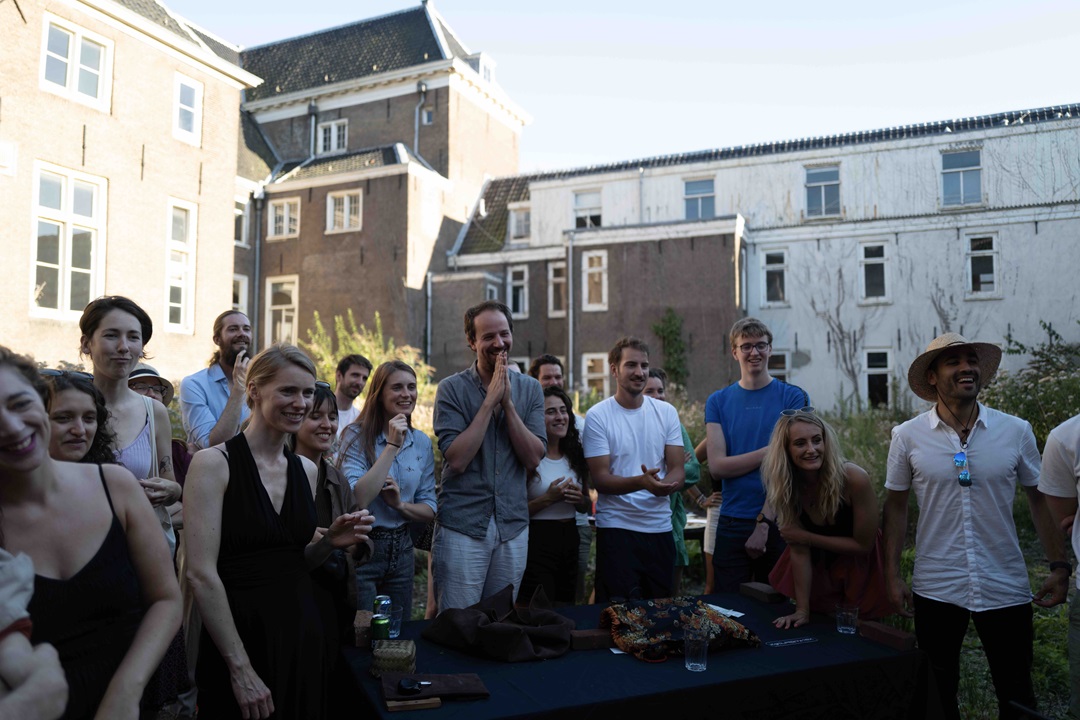
When the emotional goal changes, the atmosphere has to follow. We want laughter echoing down the corridor, not the hushed concentration that suits a darker, more serious experience. The vibe is the design.
"We focus more on collaboration, maybe a little bit more on fun and less on realism," Victor shares.
Pulling back on a hyper-serious storyline does something genuinely useful to office dynamics. The rigid hierarchy of the boardroom softens. A manager finds themselves following the lead of someone three levels below them on the org chart. A quiet colleague suddenly becomes the person who cracks the key puzzle in the room.
That redistribution of perceived competence is one of the more interesting things that happens in our rooms, and it almost always starts with the story giving people permission to be playful.
A Case Study: 17th-century Ships and Playful History
Our most recent corporate game, Parlay, is a good way to show how this philosophy works in practice. The subject is 17th-century Dutch maritime history, genuinely rich territory full of real ships, real trade routes, and real intrigue.
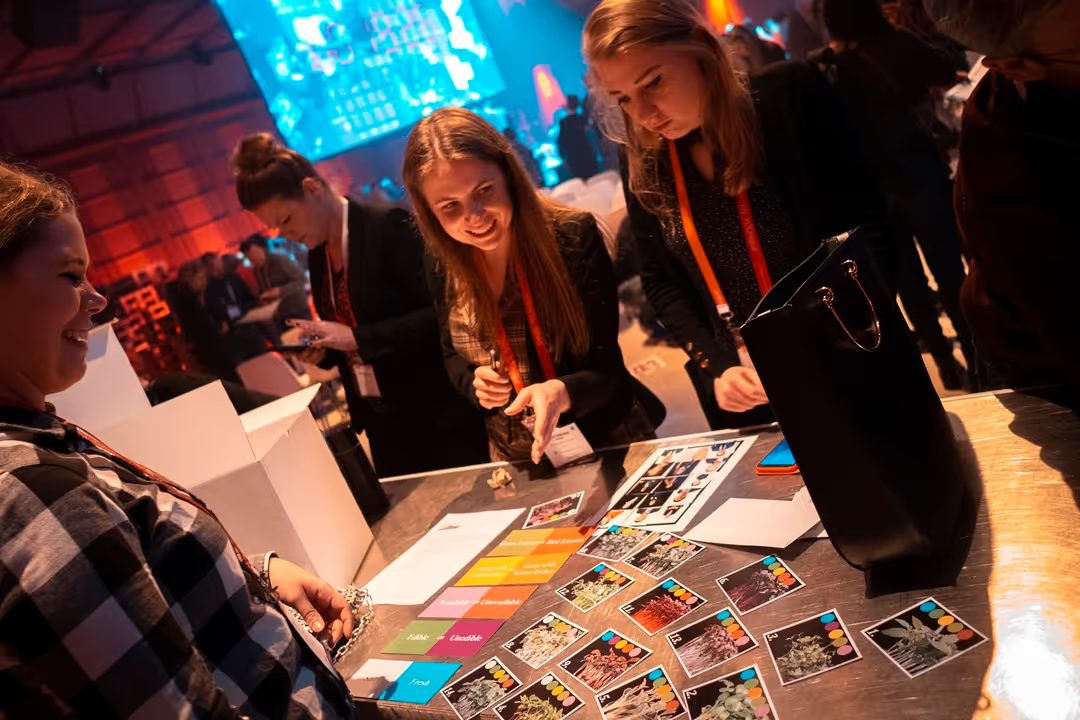
Up to 25 players share one room, split into four crews. Each crew opens the sea trunk of a great 17th-century trading nation, Dutch, English, Spanish or Chinese, and at some point needs something another crew is holding. What starts as a race quietly turns into a negotiation, and the treasure only appears once every trunk is open.
We poured careful research into it. Every object, every reference, every detail placed inside the game actually existed during that era. Historical accuracy was not sacrificed at any point.
The story we wrapped around that accuracy, however, is wonderfully and deliberately absurd.
"We took a lot of liberties with humor in the game," Francine explains. "We didn't make a very serious story. We made a funny story."
The result is a game that feels both grounded and gleefully ridiculous, which turns out to be the exact combination that makes tired colleagues laugh out loud together. History does not have to feel like a dusty textbook to be engaging. Sometimes a 17th-century admiral just needs to be a bit of an idiot.
What Designing without Rules Taught Us
Letting go of our usual obsession with realism made this one of the most joyful creative processes our studio has had in twelve years. At Sherlocked, we typically spend our time chasing absolute believability: the physics of a room, the plausibility of a plot, the internal logic of every puzzle.
It is part of what we call blurring the line between fiction and reality, and it is what makes our flagship experiences feel genuinely immersive.
"It's been a bit more liberating that for this particular game, you didn't need to make it a realistic thing, so you could be a little bit more loose," Victor reflects.
That looseness unlocked speed, silliness, and a kind of spontaneous joy in the design process itself. The lesson reaches well beyond escape rooms. Sometimes the best creative work happens when you give yourself permission to play.
What Corporate Experience Design actually Requires
If you are an event planner, an HR lead, or a team manager thinking about what makes a memorable company outing, here is what twelve years of designing for real humans has taught us.
- Meet people where they are. A great experience reads the room, and tired teams need momentum and warmth, not a gauntlet.
- Design for confidence as much as challenge. The most memorable corporate experiences leave people feeling capable, not defeated.
- Give permission to be silly. Humor dissolves hierarchy faster than any structured exercise we know.
- Let the story carry the weight. Even a loose, funny narrative gives people something to inhabit together, and that is where real connection tends to happen.
And if you are wondering whether an escape room is even the right format for your team, we wrote an honest piece on exactly that question, and it is worth reading before you book.
The Real Outcome of a Well-Designed Corporate Game
When we see a team walk out of our doors standing a little taller than when they arrived, still laughing about something that happened in a room full of 17th-century nonsense, we know the magic has worked.
The lesson underneath it all is simple. Empathy, humor, and a little well-placed silliness are not soft additions to good design, they are the design.
If your team has had a long quarter, we would love to welcome you. You can explore our escape rooms for smaller groups, Parlay for groups of 12 to 50, or Secret Sender if you would rather take the team outside. Let's create something your colleagues are still talking about on Friday morning.
Table of Contents